
Medically reviewed by Dr. Eugene Bernstein, DDS – Implant Dentist | 24+ Years Experience | Last Updated: March 2026
Usually the Crown, Not the Implant
A loose feeling is most often the crown or abutment on top – typically an easy fix. Contact your dentist right away for evaluation.
If your dental implant feels loose, do not panic. In most cases, what feels loose is the crown or abutment sitting on top of the implant, not the implant post itself. This is usually a straightforward repair that your dentist can handle quickly. However, if the actual implant post is mobile, this could indicate a more serious issue that requires prompt professional attention.
Contact your dentist right away if you notice any looseness. Early evaluation can often prevent more serious complications and protect the investment you have made in your smile.
Loose Crown vs. Loose Implant: How to Tell the Difference
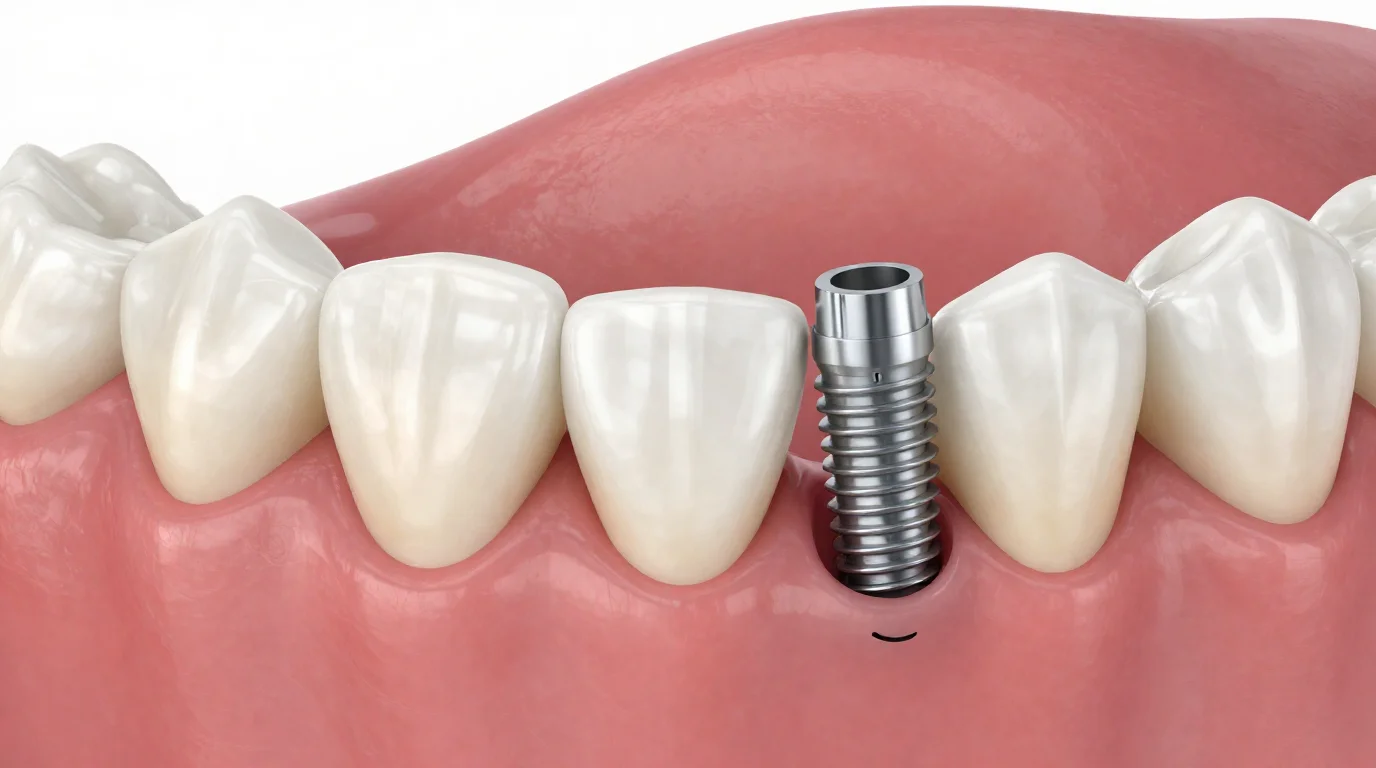
Understanding what part of your implant system feels loose helps your dentist address the problem more efficiently. A dental implant has three main components: the implant post (a titanium screw embedded in your jawbone), the abutment (a connector piece), and the crown (the visible tooth on top).
Loose Crown – More Common, Easier Fix
The visible tooth on top moves or wobbles
You may feel something solid underneath
The crown may spin or feel like it is lifting off
Usually repaired in a single office visit
Loose Implant Post – Less Common, More Serious
The entire structure feels mobile, including what feels like the root
You may notice movement deep in the gum
Less common but requires immediate attention
Treatment depends on the underlying cause
If you are unsure which part is loose, do not try to test it yourself. Schedule an appointment and let your dentist use the proper diagnostic tools, including a dental CT scan if needed, to determine exactly what is happening.
What Causes a Dental Implant Crown to Come Loose?
A loose crown is the most frequently reported implant concern, and it is usually a straightforward fix. Understanding the common causes can help you recognize what happened and communicate effectively with your dentist.
| Cause | What Happens | Typical Fix |
|---|---|---|
| Loose screw | The small screw connecting crown to abutment loosens over time | Tighten or replace the screw |
| Cement failure | If cemented (not screwed), the dental cement weakens over time | Re-cement the crown |
| Normal wear | Years of chewing gradually affects the connection | Adjustment or component replacement |
| Bite misalignment | Uneven bite forces put extra stress on the crown connection | Bite adjustment + retighten |
Regular dental checkups help catch these issues before the crown actually becomes loose. Your dentist can check the tightness of implant components during routine visits.
What Causes the Actual Implant Post to Become Loose?
If the implant post itself is mobile, this is a more serious concern that requires immediate professional evaluation. Several conditions can cause an implant post to lose stability.
Serious Causes That Need Immediate Attention
Failed osseointegration: The jawbone did not properly fuse with the implant post. This usually becomes apparent during the initial healing period after placement.
Peri-implantitis: A bacterial infection around the implant that can progressively destroy the supporting bone. This is why periodontal health is critical for implant longevity.
Trauma or injury: A significant impact to the mouth or jaw can damage the bond between implant and bone.
Excessive forces: Chronic teeth grinding or clenching can place too much stress on the implant over time, weakening its connection to the bone.
The specific cause of a loose implant post determines what treatment options are available. Your dentist will need to perform a thorough examination, potentially including imaging, to diagnose the issue accurately. To understand what to expect, visit our dental implant FAQ page.
What Should You Do If Your Implant Feels Loose?
Steps to Take Right Now
1. Contact your dentist immediately. Do not wait for your next scheduled appointment. Early treatment often leads to better outcomes and simpler repairs.
2. Do not wiggle or touch the implant. Avoid manipulating the loose component with your tongue or fingers, as this could cause further damage or introduce bacteria.
3. Avoid chewing on that side. Shift your chewing to the opposite side of your mouth until you can be evaluated.
4. Do not try to fix it yourself. Do not attempt to push the crown back on, use household adhesives, or tighten anything on your own. Improper handling can make the problem worse.
5. Save any pieces that come off. If the crown detaches completely, place it in a clean container and bring it to your appointment.
Can a Loose Implant Be Saved?
Whether a loose implant can be saved depends entirely on what is causing the looseness and how quickly you seek treatment. Each situation is different, and your dentist will need to evaluate your specific case before recommending a course of action.
Loose crown or abutment: This is almost always repairable. Your dentist can retighten the screw, re-cement the crown, or replace a worn component. These repairs are typically completed in a single visit.
Loose implant post: Treatment options vary significantly depending on the cause and extent of bone loss. In some cases, early intervention can stabilize the implant. In other cases, the implant may need to be removed, the area allowed to heal, and a new implant placed. Your dentist will discuss all available options during your evaluation.
The most important factor in saving a loose implant is acting quickly. The longer you wait, the more limited your options may become. Schedule a consultation with our experienced dental team to get a professional assessment of your situation.
How to Protect Your Dental Implant Long-Term
Prevention is always better than repair. Taking care of your dental implant properly can help it last for decades.
Regular dental checkups: Visit your dentist every six months so they can monitor your implant, check component tightness, and catch potential issues before they become problems.
Excellent oral hygiene: Brush twice daily and floss around your implant every day. Plaque buildup around an implant can lead to peri-implantitis, which is one of the leading causes of implant failure.
Night guard for grinders: If you grind or clench your teeth, ask your dentist about a custom night guard. Chronic grinding places excessive force on implants and can loosen components or damage the bone connection over time.
Avoid harmful habits: Do not chew ice, hard candy, pen caps, or use your teeth to open packages. These habits can damage both natural teeth and implant components.
Address bite changes promptly: If you notice that your bite feels different or that your implant crown does not line up with your other teeth the way it used to, let your dentist know. Bite misalignment can accelerate wear on implant components.
Dental Implant Care at Gentle Dental of NJ
At Gentle Dental of NJ in Newark, our team has extensive experience with dental implant placement, maintenance, and repair. Dr. Eugene Bernstein, DDS, has over 24 years of experience in implant dentistry and leads a team of five dentists who provide comprehensive care for patients throughout Newark and the surrounding communities.
If your dental implant feels loose, we offer prompt evaluation to determine the cause and recommend the appropriate treatment. Our office is equipped with advanced diagnostic technology, including dental CT scanning, which allows us to assess bone density and implant stability with precision.
We accept most major insurance plans and offer flexible payment options to make dental care accessible for every patient.
Implant Feeling Loose? Do Not Wait.
Contact us right away for a prompt evaluation. Early treatment leads to better outcomes.
Frequently Asked Questions
Is a loose dental implant an emergency?
While not always a medical emergency in the traditional sense, you should contact your dentist as soon as possible. Early evaluation can prevent further complications, protect your jawbone, and often results in a simpler, less costly repair. Do not wait for your next scheduled appointment.
Can I push the crown back on myself?
No. Do not try to reattach a loose or detached crown yourself using household adhesives or by pushing it back into place. Keep the crown in a clean, safe container and bring it to your dental appointment. Your dentist has the proper tools and materials to secure it correctly without damaging the abutment or implant.
How much does it cost to fix a loose implant?
Cost depends on what is causing the problem. Tightening a loose screw or re-cementing a crown is typically a simple, low-cost repair. More complex issues involving the implant post, bone grafting, or implant replacement will cost more. Your dentist will explain all options and associated costs after a thorough evaluation. Ask about our payment options during your visit.
How long should a dental implant last?
With proper care and regular dental checkups, a dental implant post can last a lifetime. The crown on top typically lasts 10 to 15 years before it may need replacement due to normal wear. Maintaining excellent oral hygiene and addressing any issues promptly are the best ways to maximize your implant’s lifespan. Schedule a consultation with our team to discuss your specific situation.
Can peri-implantitis be treated?
Treatment options for peri-implantitis depend on how early it is caught and how much bone loss has occurred. Your dentist will need to evaluate the extent of the condition before recommending a treatment approach. This is one of the reasons regular checkups are so important – early detection gives you the most treatment options. Contact our office to schedule an evaluation if you have concerns about your implant health.
Medical Disclaimer: This article is for informational purposes only and is not a substitute for professional dental advice, diagnosis, or treatment. Every patient’s situation is unique. Contact a qualified dentist to evaluate your specific dental implant concerns.