
Dental implants are generally the better long-term solution for replacing missing teeth. Implants can last 25 years or longer, preserve your jawbone, and do not require altering healthy adjacent teeth. However, a dental bridge may be the right choice if you need a faster, more affordable option or are not a candidate for implant surgery.
Both options can restore your smile and ability to eat comfortably. The best choice depends on your budget, overall health, how many teeth you are missing, and your long-term goals. Here is what you need to know to make an informed decision.
What Is the Difference Between a Bridge and an Implant?
A dental bridge and a dental implant take completely different approaches to replacing a missing tooth.
Dental Bridge: A bridge is an artificial tooth (called a pontic) held in place by crowns attached to the natural teeth on either side of the gap. The dentist files down these adjacent teeth to make room for the crowns that anchor the bridge. A bridge typically replaces one to three consecutive missing teeth.
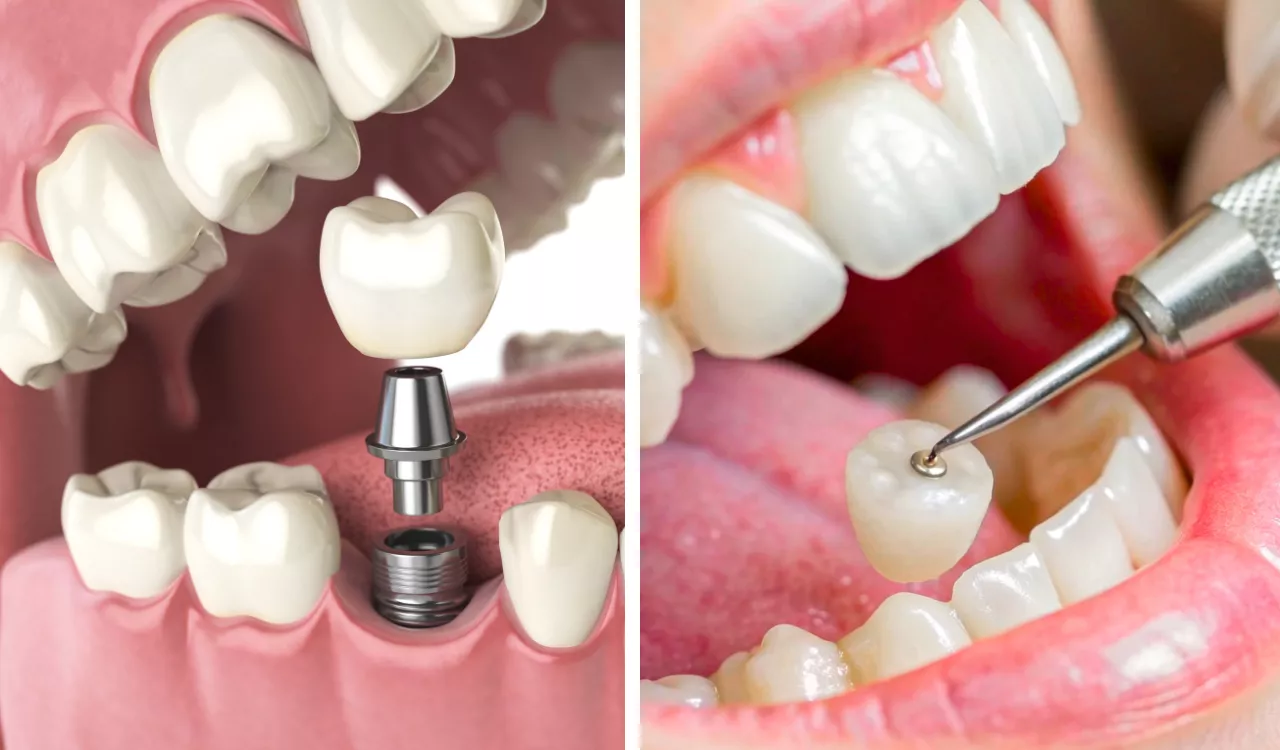
Dental Implant: An implant is a titanium post surgically placed into your jawbone to act as an artificial tooth root. Over several months, the bone fuses around the implant in a process called osseointegration. Once healed, a custom crown is attached to the implant. As Dr. Eugene Bernstein explains, “Dental implants function exactly like a natural tooth.”
How Long Does Each Option Last?
Longevity is one of the biggest differences between these two options.
Dental Implants: With proper care, dental implants can last 25 years or even a lifetime. The implant post itself is designed to be permanent. The crown on top may need replacement after 15 to 20 years due to normal wear. At Gentle Dental of NJ, we have patients with implants that have lasted over 25 years without any problems.
Dental Bridges: Bridges typically last 10 to 15 years before needing replacement. Some bridges may fail sooner if the supporting teeth develop decay or if the bridge becomes loose. Over time, you may need to replace a bridge two or three times during your lifetime, which adds to the total cost.
Which Option Protects Your Jawbone?
This is where dental implants have a clear advantage that many patients do not know about.
When you lose a tooth, the jawbone beneath it begins to deteriorate because it no longer receives stimulation from chewing. This bone loss continues over time and can affect your facial structure, causing a sunken appearance around the mouth.
Dental implants are the only tooth replacement option that stimulates the jawbone and prevents this bone loss. Because the titanium post is anchored in the bone, it mimics the function of a natural tooth root and keeps the bone healthy.
Bridges sit on top of the gums and do not provide any stimulation to the underlying bone. While a bridge restores your ability to chew, it does not prevent the gradual bone loss that occurs after tooth loss.
Cost Comparison: Bridge vs Implant
Cost is often a deciding factor when choosing between a bridge and an implant.
Dental Bridge Upfront Cost: A traditional three-unit bridge (replacing one tooth with crowns on two adjacent teeth) typically costs $2,000 to $5,000. Insurance is more likely to cover a portion of the bridge treatment.
Dental Implant Upfront Cost: A single dental implant with a crown costs $3,000 to $5,000. Insurance coverage for implants varies by plan.
Long-Term Cost Consideration: While bridges cost less initially, they typically need replacement every 10 to 15 years. If you replace a bridge twice over 30 years, the total cost may exceed the one-time investment of an implant that lasts the same period without replacement.
When Is a Dental Bridge the Better Choice?
A dental bridge may be the right option in certain situations:
You need teeth replaced quickly: A bridge can be completed in two to three weeks, while implants require several months of healing time.
You are not a candidate for surgery: Certain health conditions or medications may make implant surgery inadvisable. A bridge does not require surgery.
Budget is a primary concern: If upfront cost is the deciding factor and financing is not an option, a bridge provides a functional restoration at a lower initial price.
Adjacent teeth already have crowns or damage: If the teeth next to the gap already need crowns due to decay or old fillings, a bridge makes practical sense since those teeth would be crowned anyway.
When Is a Dental Implant the Better Choice?
A dental implant is typically the better choice when:
You want a permanent solution: If you prefer a restoration that can last a lifetime with proper care, an implant is the best investment.
Preserving healthy teeth matters to you: Unlike bridges, implants stand independently without requiring any alteration to neighboring teeth. Your healthy teeth remain untouched.
You want to prevent bone loss: Only implants stimulate the jawbone and prevent the deterioration that occurs after tooth loss.
You are in good overall health: Healthy patients with adequate jawbone typically have excellent outcomes with dental implants. Bone grafting can address insufficient bone in many cases.
Does a Bridge Damage Healthy Teeth?
This is an important consideration that many patients overlook. To place a traditional bridge, the dentist must file down the two teeth adjacent to the gap. A significant amount of healthy tooth structure is removed to make room for the crowns that anchor the bridge.
Once a tooth is filed down for a crown, it will always need a crown. If the bridge fails in the future, those teeth cannot return to their original state. Additionally, the area where the crown meets the tooth can be more susceptible to decay over time.
Dental implants do not affect surrounding teeth at all. The implant is placed directly into the jawbone in the gap, leaving neighboring teeth completely intact.
Dental Bridges and Implants in Newark, NJ
At Gentle Dental of NJ, we offer both dental bridges and dental implants so you can choose the option that best fits your needs. Our team provides honest guidance to help you make the right decision for your situation.
Led by Dr. Eugene Bernstein, DDS, our practice has been placing dental implants for over 24 years with a 98% success rate. Dr. Bernstein is a member of the Academy of Implant Dentistry and has extensive experience helping patients restore their smiles.
Why choose Gentle Dental of NJ:
Multi-Specialty Team: Our periodontist handles complex implant cases and bone grafting right here in our office. No outside referrals needed.
Advanced Technology: 3D cone beam CT imaging allows precise treatment planning for optimal implant placement.
Flexible Payment Options: We accept major insurance plans and offer CareCredit financing to make treatment affordable.
Bilingual Staff: Our team speaks English, Spanish, and Portuguese to serve Newark’s Ironbound community.
Schedule a consultation to discuss your options. We will examine your mouth, explain both bridge and implant options, and help you decide which treatment is right for you. Call 973-817-8888 or request an appointment online.
Frequently Asked Questions
Is a bridge cheaper than an implant?
Yes, a dental bridge typically has a lower upfront cost than an implant. However, bridges need replacement every 10 to 15 years, while implants can last 25 years or more. Over your lifetime, the total cost of multiple bridge replacements may exceed the one-time cost of an implant.
Can a bridge be replaced with an implant later?
Yes, you can replace a bridge with an implant later. However, there may be bone loss in the area where the bridge was placed, which could require bone grafting before implant placement. The teeth that were filed down for the bridge crowns will still need crowns. Schedule a consultation to discuss your specific situation.
How many teeth can a bridge replace?
A traditional bridge can replace one to three consecutive missing teeth. For larger gaps, an implant-supported bridge may be a better option because it does not rely solely on natural teeth for support.
Do bridges damage other teeth?
Bridges require filing down the healthy teeth on either side of the gap to place anchor crowns. This permanently alters those teeth. Implants do not affect surrounding teeth at all because they are anchored directly into the jawbone.
Which option looks more natural?
Both bridges and implants can look very natural when made with quality materials and proper technique. Implants may maintain their natural appearance longer because they prevent bone loss that can change facial structure over time. Both options are custom-crafted to match your existing teeth.
Medically reviewed by Dr. Eugene Bernstein, DDS. This content is for educational purposes only and is not intended as medical advice, diagnosis, or treatment. Please consult a qualified healthcare provider for personalized recommendations.