
Reviewed by Dr. Eugene Bernstein – 24+ Years Experience in Dental Implants | Last Updated: April 2026
If your natural tooth can be saved with a root canal and has a good long-term outlook, saving it is usually the better choice. However, if the tooth is severely damaged, has a poor prognosis, or has already had a failed root canal, extraction and implant may be a smarter investment. Your dentist will evaluate the specific condition of your tooth to help you determine the best option for your situation.
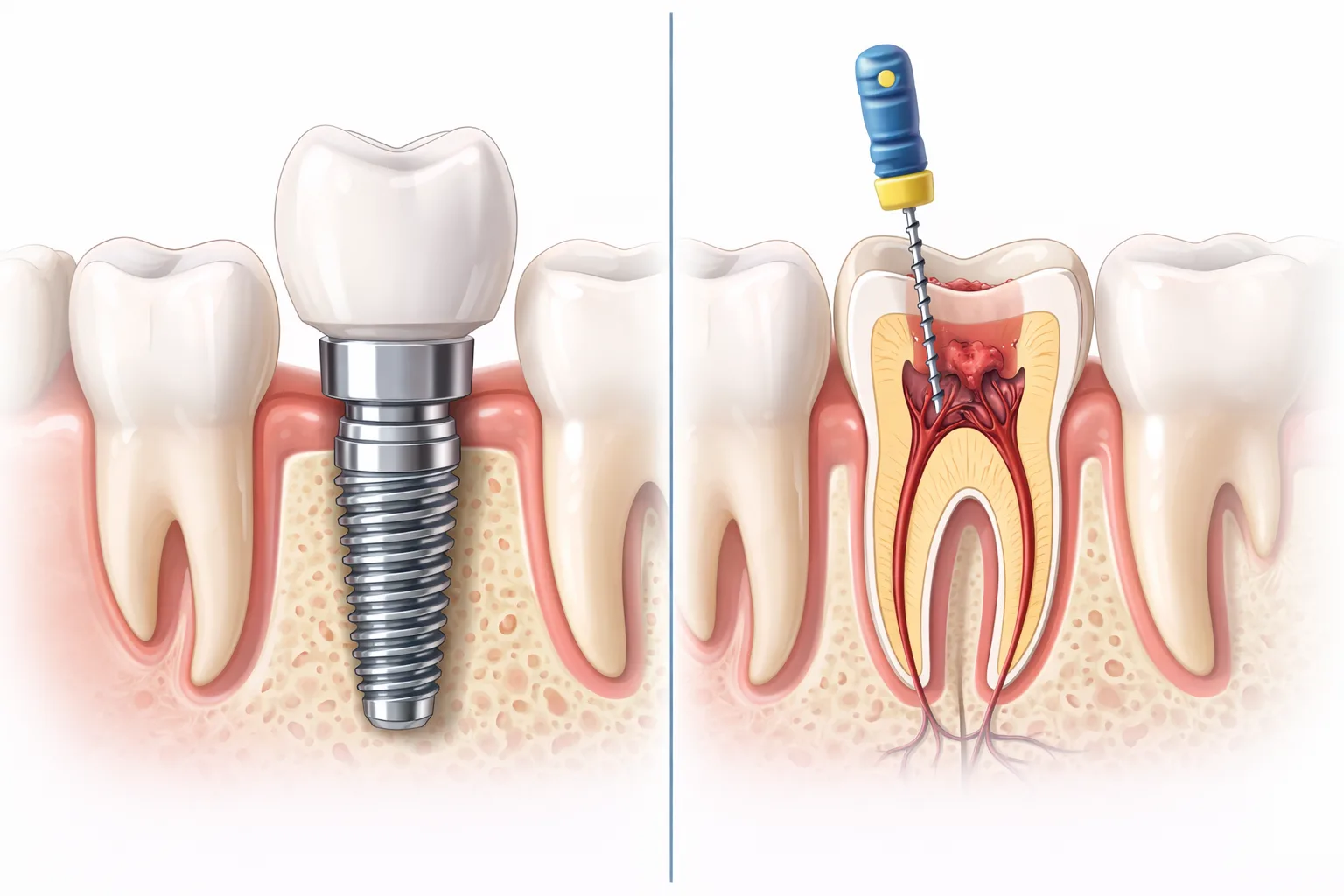
This is one of the most common dental dilemmas patients face. Both treatments have high success rates, but they serve different purposes. Understanding the differences can help you have a more informed conversation with your dentist about what is right for you.
Quick Comparison: Root Canal vs Dental Implant
| Factor | Root Canal + Crown | Dental Implant |
|---|---|---|
| Purpose | Saves your natural tooth | Replaces the entire tooth |
| Success rate | 85% – 95% | 95% – 98% |
| Upfront cost | Lower | Higher |
| Insurance coverage | Often more comprehensive | Varies, often more limited |
| Treatment time | 1-2 visits | 3-6 months (with healing) |
| Longevity | Many years to decades | Designed to last a lifetime |
| Can it decay? | Yes (around the crown) | No (titanium + porcelain) |
When Is a Root Canal the Better Choice?
A root canal is a procedure that saves your natural tooth by removing infected or damaged tissue from inside the tooth, then sealing it to prevent further problems. Your dentist may recommend a root canal when:
The tooth can be saved. If the tooth structure is intact enough to support a filling and crown after treatment, saving the natural tooth is often preferred.
Good long-term prognosis. If your dentist believes the tooth has a good chance of lasting many years after treatment, a root canal may be the right choice.
You prefer to keep your natural tooth. Many patients value preserving their own teeth when possible. A root canal allows you to keep your natural tooth structure, which helps maintain your jawbone and the natural alignment of surrounding teeth.
Budget considerations. Root canals typically cost less than dental implants, and insurance coverage for root canals is often more comprehensive. For more details, see our guide on how much a root canal costs.
When Is Extraction and Implant the Better Choice?
A dental implant replaces the entire tooth, including the root. Your dentist may recommend extraction and implant when:
The tooth cannot be saved. If the tooth is cracked below the gumline, has severe decay, or does not have enough structure remaining to support a crown, extraction may be necessary.
Previous root canal failed. If a tooth that already had a root canal develops problems again, an implant may provide a more reliable long-term solution. Learn more about what happens when root canal treatment is delayed.
Poor prognosis for the tooth. If your dentist believes the tooth is unlikely to last long even with treatment, investing in an implant may make more sense.
Long-term durability is a priority. Dental implants are designed to last for decades and do not decay like natural teeth. For some patients, this makes implants a worthwhile investment. Learn more about how long dental implants last.
Cost Comparison: Root Canal vs Implant
Cost is often a significant factor in this decision.
Root canal: The procedure plus a crown typically costs less than an implant. Many dental insurance plans cover a significant portion of root canal treatment.
Dental implant: Implants generally cost more upfront, including the implant post, abutment, and crown. Insurance coverage for implants varies and is often more limited. For a full breakdown, see our guide on how much dental implants cost in Newark.
However, cost should be considered over time. A root canal that lasts many years is a good value. But if a treated tooth eventually needs to be extracted and replaced, the total cost over time could exceed the cost of an implant done initially. Your dentist can help you understand the likely long-term outlook for your specific tooth.
Success Rates: Root Canal vs Implant
Both procedures have high success rates when performed by experienced providers:
Root Canal Success: Studies report success rates of approximately 85% to 95%. Many root canal treated teeth last for decades with proper care.
Dental Implant Success: Implant success rates are typically reported between 95% and 98%. Implants are designed to be a permanent solution.
The success of either treatment depends on many factors, including your overall health, oral hygiene habits, and the skill of your dental provider. Your dentist can discuss what success rates may look like for your individual situation.
What If Your Root Canal Fails Later?
One concern patients often have is what happens if a root canal does not work or problems develop years later.
Retreatment may be possible. In some cases, a tooth that had a root canal can be retreated if problems develop. Our endodontist can evaluate whether this is an option.
Implant is still an option. If a root canal treated tooth eventually fails, you can still have it extracted and replaced with an implant. Choosing a root canal first does not eliminate the implant option later.
Bone preservation. Keeping your natural tooth helps preserve the jawbone in that area. If the tooth is later extracted, adequate bone may remain for implant placement.
How to Make the Right Decision for Your Situation
Every case is different, and the right choice depends on factors that only a thorough dental examination can reveal. Here are some practical steps to help you decide:
Get a complete diagnosis first. Before committing to either treatment, make sure your dentist has taken X-rays and thoroughly evaluated the tooth. The extent of damage, the presence of cracks, the condition of surrounding bone, and your overall oral health all play a role.
Ask about the realistic lifespan of each option. A root canal on a tooth with minimal remaining structure may only last a few years. An implant in good bone with healthy gums may last a lifetime. Understanding the expected longevity helps you compare the true long-term value.
Consider your overall dental health. If you have gum disease or other conditions that affect healing, that may influence which treatment is more likely to succeed. Patients with uncontrolled diabetes or heavy smoking may face different success rates for implants.
Do not delay treatment. Whether you choose a root canal or an implant, acting promptly matters. A tooth that could have been saved with a root canal today may become unsaveable if infection spreads. Similarly, waiting too long after extraction can lead to bone loss that complicates implant placement.
Questions to Ask Your Dentist
When discussing your options, consider asking:
- What is the condition of my tooth? Can it be saved?
- What is the likely long-term prognosis if I choose a root canal?
- What are the risks of each option in my situation?
- What will each option cost, and what does my insurance cover?
- What do you recommend for my specific situation and why?
Your dentist knows your dental history and can examine the tooth directly. They are the best source of guidance for your individual case.
Restorative Dentistry at Gentle Dental of NJ
At Gentle Dental of NJ, we offer both root canal therapy and dental implant services. Our goal is to help you make the best decision for your oral health and provide quality care whichever path you choose.
- Comprehensive evaluation: We thoroughly examine your tooth and discuss all your options so you can make an informed decision
- Endodontist on staff: Our endodontist specializes in root canal therapy and can handle complex cases
- Experienced implant team: Dr. Eugene Bernstein has over 24 years of experience placing dental implants
- All services under one roof: Whether you need a root canal, extraction, or implant, we can provide care right here in our Newark office
We also offer related services including dental crowns, full implant restoration, and periodontal treatment to support your long-term oral health.
If you have a damaged or painful tooth and are unsure whether a root canal or implant is right for you, schedule a consultation. We will evaluate your tooth, explain your options, and help you make the best decision. Call 973-817-8888 or request an appointment online.
Frequently Asked Questions
Can a root canal tooth last forever?
A well-done root canal with a proper crown can last many years or even decades. However, the tooth may still be susceptible to fracture or new decay around the crown. Regular dental checkups help monitor the health of a root canal treated tooth. Learn more about how long dental crowns last.
Is implant surgery more painful than a root canal?
Both procedures are performed with anesthesia to keep you comfortable. Many patients report that the discomfort after either procedure is manageable with over-the-counter pain relievers. For more details on what to expect, read our article on whether dental implants hurt.
What about a tooth that already had a root canal?
If a tooth that previously had a root canal develops new problems, your dentist will evaluate whether retreatment is possible or whether extraction and implant is the better option. Each situation is different, so a professional evaluation is needed.
How do I know if my tooth can be saved?
Only a thorough dental examination with X-rays can determine whether a tooth can be saved. Factors include the extent of decay, whether the tooth is cracked, how much healthy tooth structure remains, and the condition of the surrounding bone. Schedule a consultation so your dentist can assess your specific situation.
Is a dental bridge a third option?
Yes. A dental bridge is another way to replace a missing tooth. However, bridges require altering the adjacent healthy teeth and do not preserve the jawbone the way implants do. Your dentist can help you compare all three options.
Medical Disclaimer: This article is for informational purposes only and is not a substitute for professional medical advice, diagnosis, or treatment. Always consult with a qualified healthcare provider regarding any medical concerns.