
Medically reviewed by Dr. Eugene Bernstein, DDS, Founder of Gentle Dental of NJ, 24+ Years Experience | Last Updated: April 2026
Quick Answer
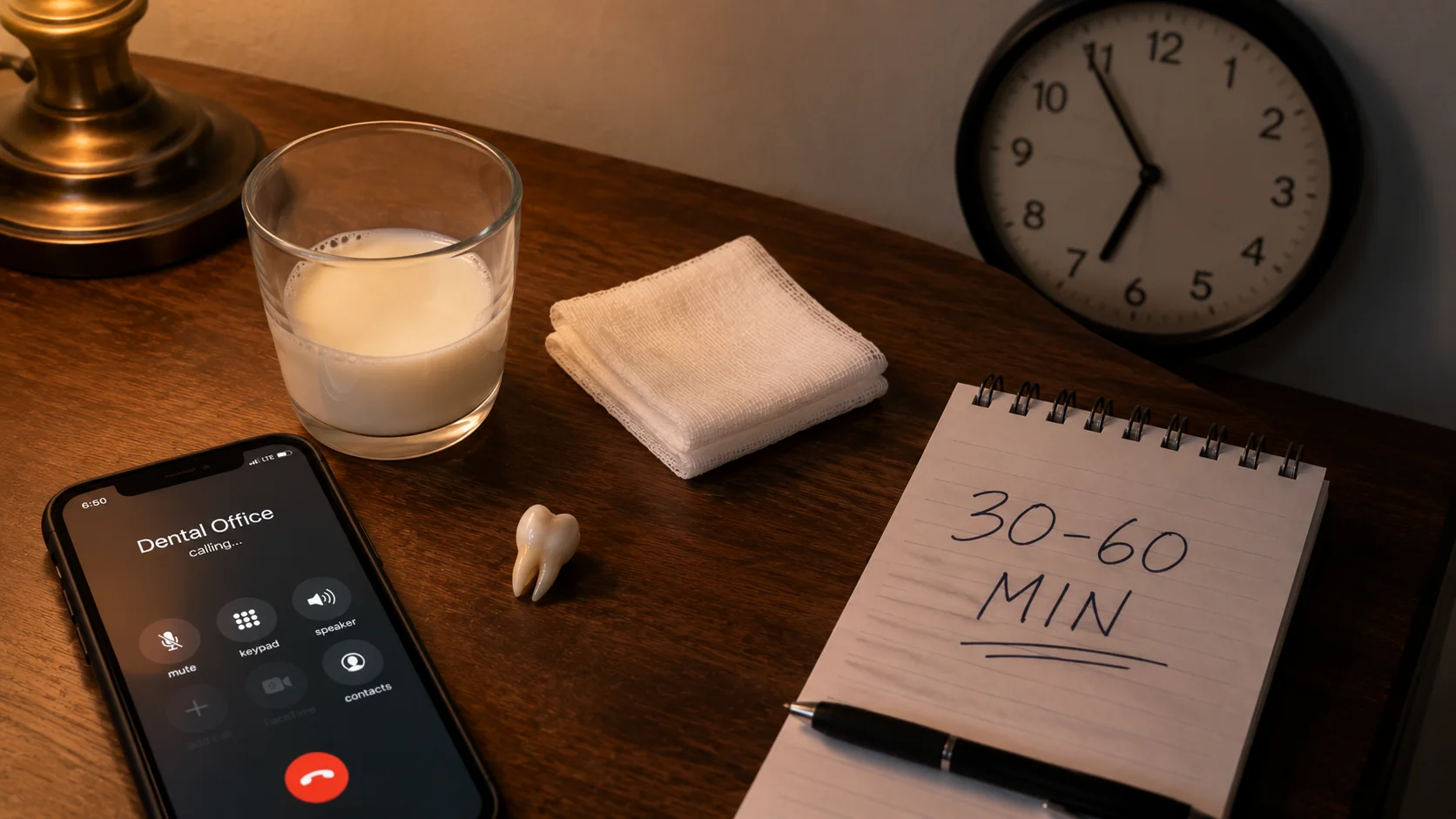
Call an emergency dentist in Newark NJ for a knocked-out tooth, severe uncontrollable pain, facial swelling, persistent bleeding for over 30 minutes, or signs of infection (fever plus tooth pain). For minor chips, lost fillings, or temporary discomfort, schedule a same-week appointment instead. A knocked-out adult tooth is the single most time-sensitive case: reimplant within 30 to 60 minutes for the best chance of saving the tooth.
Dental emergencies happen at inconvenient times: a Friday night, a holiday weekend, or the morning of a flight. Knowing whether to call an emergency dentist immediately, head to the ER, or wait for a regular appointment can save you a tooth, prevent a worse infection, and avoid an unnecessary $1,000+ ER bill. This guide covers what counts as a true dental emergency in Newark NJ, what to do right now while you wait for care, and what is safe to defer.
Answers throughout reflect clinical guidance from Dr. Eugene Bernstein, DDS, founder of Gentle Dental of NJ in Newark, who has handled emergency dental cases in the Ironbound community for over 24 years.
What Counts as a True Dental Emergency
A genuine dental emergency is a situation where waiting until your next regular appointment would risk losing the tooth, spreading an infection, or causing significant additional damage. The shortlist:
- Knocked-out adult tooth (avulsion). Most time-sensitive case. Reimplant within 30 to 60 minutes.
- Severe, uncontrollable tooth pain that is not relieved by over-the-counter pain medication.
- Facial swelling that is visible from the outside, especially if it crosses the cheekbone or extends down the neck.
- Bleeding from the mouth that does not stop after 30 minutes of firm pressure.
- Suspected dental abscess: throbbing pain, fever above 100F, swollen gum with a white or yellow bump (pus pocket).
- Cracked or fractured tooth with severe pain or visible nerve.
- Loose or partially dislodged tooth in an adult.
- Lost crown or filling exposing visible nerve with severe sensitivity.
- Trauma to the jaw with concern for fracture, especially after a fall or accident.
- Severe gum injury with a deep cut that is bleeding heavily.
What Is NOT a Same-Day Dental Emergency
Many situations feel urgent but are safe to schedule within the next 1 to 7 days at a regular appointment:
- Minor toothache that responds to over-the-counter pain medication and is not getting worse
- Small chip in a tooth with no pain and no rough edge cutting your tongue or lip
- Lost filling with no significant pain, no exposed nerve
- Loose or lost crown on a tooth that is not painful (save the crown, call within 1 to 2 days)
- Mild gum bleeding when brushing, or mild gum tenderness
- Sensitivity to cold or sweet in one tooth that is not getting worse
- Wisdom tooth discomfort that is dull and intermittent
- Food stuck between teeth that you cannot dislodge with floss
For these, call your dentist’s office during regular hours and request the next available appointment. Most can be seen within a week.
What to Do Right Now (Before You Reach the Dentist)
If a tooth has been knocked out
The single most time-critical dental situation. The tooth has the highest reimplantation success rate within the first 30 minutes; success drops significantly after 60 minutes.
- Pick up the tooth by the crown (the white chewing surface), NOT the root. Touching the root damages the cells needed to reattach.
- Gently rinse with milk, saline, or saliva for no more than 10 seconds. Do NOT scrub, dry, or use soap.
- Try to put the tooth back in the socket immediately. Hold it gently in place by biting on a clean cloth or gauze.
- If you cannot reimplant, store the tooth in milk, saliva (in the cheek), or a tooth-preservation solution like Save-A-Tooth. Do NOT store it in water, which damages the root cells.
- Call the dentist immediately. Tell the office it is a knocked-out tooth. They will triage you ahead of regular appointments.
- Get to the office within 30 to 60 minutes for the best outcome.
If you have severe tooth pain
- Take ibuprofen (400 to 600 mg) and acetaminophen (500 to 1000 mg) together if not contraindicated. The combination is more effective than either alone.
- Apply a cold compress to the outside of the cheek for 15 minutes on, 15 off.
- Rinse gently with warm salt water (1 tsp salt in 1 cup warm water).
- Avoid extreme hot or cold foods and drinks.
- Sleep with your head elevated on an extra pillow.
- Do NOT apply aspirin directly to the gum (causes chemical burn).
- Do NOT apply heat to the cheek (worsens swelling and infection spread).
- Call for a same-day or next-morning appointment.
If you have facial swelling or fever with tooth pain
This combination suggests an active dental infection (abscess) that can spread quickly if untreated. Steps:
- Call the dentist for a same-day appointment.
- If the swelling extends to the eye, throat, or neck, OR if you have difficulty breathing or swallowing, go to the emergency room immediately. A spreading dental infection can become life-threatening.
- Take ibuprofen for pain while waiting.
- Stay hydrated.
- Do NOT apply heat to the swollen area.
If you have persistent bleeding
Some bleeding after a tooth extraction or oral injury is normal and stops within 30 minutes of firm pressure. Bleeding that continues longer needs evaluation.
- Bite firmly on clean folded gauze or a tea bag (the tannic acid helps clotting) for 30 minutes without checking.
- Sit upright; keep your head elevated.
- If bleeding continues after 30 minutes of solid pressure, call the dentist.
- If bleeding is heavy and not responding to pressure, head to the ER.
Dental Emergency vs ER: Which to Choose
The hospital ER is the right call ONLY for:
- Major facial trauma with possible jaw fracture
- Uncontrolled bleeding that is not responding to firm pressure
- Swelling that affects breathing or swallowing
- Signs of a spreading infection: fever above 102F, neck stiffness, vision changes
- Loss of consciousness from dental trauma
For everything else dental, an emergency dentist is the right (and far cheaper) call. ER doctors typically only prescribe pain medication and antibiotics for dental issues; they do not treat the underlying tooth problem. The dental fix still has to happen in a dental office afterward.
| Situation | Where to Go |
|---|---|
| Knocked-out tooth | Emergency dentist (within 30 to 60 minutes) |
| Severe tooth pain | Emergency dentist (same day) |
| Facial swelling, no breathing trouble | Emergency dentist (same day) |
| Swelling affecting breathing or swallowing | ER immediately |
| Suspected jaw fracture from trauma | ER immediately |
| Heavy bleeding not stopping | ER if not controllable; dentist otherwise |
| Lost crown or filling, no pain | Schedule within 1 to 2 days |
| Cracked tooth with mild pain | Schedule within a few days |
Common Dental Emergencies in Newark
The most frequent emergencies our practice sees from patients in Newark, the Ironbound, Forest Hill, Vailsburg, and Weequahic neighborhoods:
Soccer and basketball injuries (knocked-out or chipped teeth). Newark has active youth sports leagues and pickup games at the parks. A mouthguard prevents most of these.
Late-stage cavity flare-ups (severe throbbing pain). Often a tooth that the patient knew was bothering them for weeks finally tipping into acute pain. Same-day relief is possible with a pulpotomy or root canal start.
Lost or broken crowns, often from biting unexpected hard items in food (olive pits, popcorn kernels).
Wisdom tooth abscesses, especially in young adults who postponed evaluation.
Cracked teeth from grinding (bruxism), more common in patients under chronic stress.
Most of these can be triaged the same day with a phone call and an in-office exam, and most can be brought to immediate relief or stabilized within one visit.
How to Prevent Most Dental Emergencies
About 70% of dental emergencies are preventable with three habits:
- Wear a mouthguard for contact sports, including basketball, soccer, hockey, martial arts, and any youth sport with regular physical contact.
- Do not use teeth as tools. No opening packages, no biting fingernails, no chewing pens, no cracking ice.
- Keep up with regular cleanings and exams every six months. Most acute pain emergencies are detectable as small cavities or cracks during a routine exam, when treatment is much simpler and cheaper.
Working with Gentle Dental of NJ for Urgent Care
Dr. Bernstein and the team at Gentle Dental of NJ have served Newark patients for over 24 years from our 290 Ferry Street office in the Ironbound. Same-day evaluations are available for true dental emergencies during business hours; after-hours messages are returned the next morning. For knocked-out teeth, please call from the road on the way in so the team can prepare for immediate reimplantation evaluation.
Need urgent dental care in Newark? Call Gentle Dental of NJ at (973) 817-8888 for same-day triage. Our office is at 290 Ferry Street, Newark, NJ in the Ironbound. For life-threatening swelling, breathing trouble, or major trauma, go to the emergency room first. Schedule a consultation.
Frequently Asked Questions
What counts as a dental emergency?
Knocked-out adult teeth, severe uncontrollable pain, facial swelling, persistent bleeding for over 30 minutes, signs of infection (fever plus tooth pain), and major dental trauma are true emergencies. Minor chips, lost fillings without pain, and dull intermittent discomfort can be scheduled within a few days at a regular appointment.
What should I do if my tooth gets knocked out?
Pick up the tooth by the crown (white part), gently rinse with milk or saline, and try to reimplant it in the socket. If reimplantation is not possible, store the tooth in milk or in your cheek. Get to a dentist within 30 to 60 minutes. The success rate drops sharply after one hour out of the socket.
Should I go to the ER for a toothache?
No. ERs cannot treat the underlying tooth problem; they only prescribe pain medication and antibiotics. The dental fix still has to happen at a dental office. Go to the ER only if you have facial swelling that affects breathing or swallowing, uncontrolled bleeding, suspected jaw fracture, or signs of a spreading infection (high fever, neck stiffness).
How quickly can I see an emergency dentist in Newark NJ?
Most Newark dental practices, including ours, reserve same-day slots for true emergencies during business hours. Call as early in the day as possible to secure a slot. After-hours emergencies (severe trauma, life-threatening swelling) should go to the ER first; non-life-threatening after-hours emergencies can usually be triaged the next morning.
How much does an emergency dental visit cost?
The exam and X-ray for an emergency visit typically run $100 to $250. The actual treatment cost depends on the procedure: a simple extraction starts around $150 to $300, a root canal start runs $300 to $700, and a temporary crown is $200 to $400. Most dental insurance covers emergency exams and basic restorative care.
Can I prevent dental emergencies?
Yes, most are preventable. Wear a mouthguard for contact sports, do not use teeth as tools (opening packages, biting fingernails, cracking ice), and keep up with cleanings and exams every six months. Most acute pain emergencies started as small cavities or cracks that were detectable during a routine exam.
This article is for informational purposes only and is not a substitute for professional dental advice, diagnosis, or treatment. Always consult with a qualified dental provider regarding any oral health concerns. For life-threatening dental injuries with severe swelling, breathing trouble, or major trauma, go to the nearest emergency room immediately.