
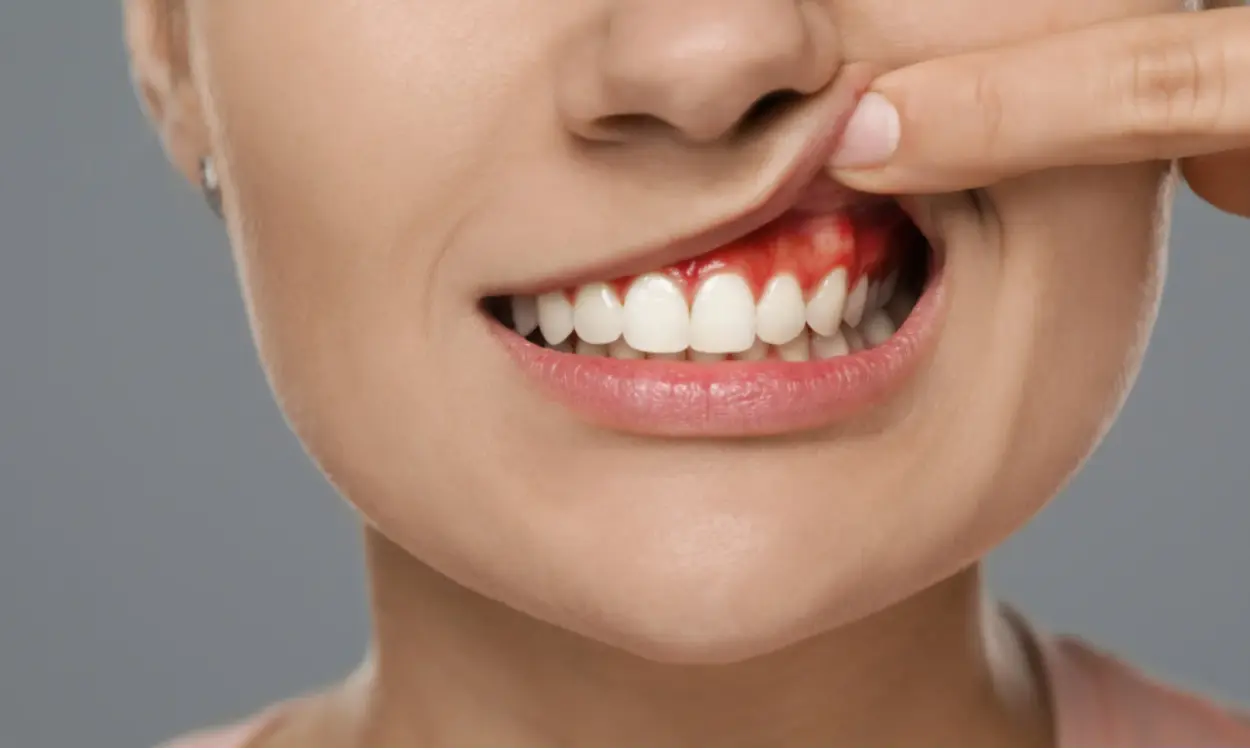
Gingivitis can be reversed with improved home oral hygiene and professional dental cleaning by your dentist. In mild cases, consistent twice-daily brushing, daily flossing, and the use of an antiseptic mouthwash can eliminate gingivitis within 1 to 2 weeks. More advanced cases require a professional cleaning to remove plaque and tartar buildup that home care cannot reach. The key is catching gingivitis early before it progresses to periodontitis, which causes permanent bone loss.
What Causes Gingivitis?
Gingivitis develops when plaque builds up along and under your gum line. Plaque is a sticky film of bacteria that forms on your teeth every day. When plaque is not removed through regular brushing and flossing, it hardens into tartar, which irritates your gums and causes inflammation.
Several factors increase your risk of developing gingivitis. Poor oral hygiene is the most common cause, but other contributors include smoking or chewing tobacco, hormonal changes during pregnancy, uncontrolled diabetes, certain medications that reduce saliva flow, crooked teeth that are difficult to clean, and a family history of gum disease.
Nearly half of all adults have some degree of gum disease, making it one of the most common oral health conditions. The good news is that gingivitis is the only stage of gum disease that is fully reversible with proper treatment.
Signs You Have Gingivitis
Gingivitis symptoms are not always obvious in the early stages, which is why many people have it without knowing. As the condition progresses, you may notice red, swollen, or puffy gums that appear darker than their normal pink color. Gums that bleed easily when you brush or floss are a telltale sign.
Other symptoms include persistent bad breath that persists after brushing, tender or painful gums when touched, and gums that are starting to pull away from your teeth. You may also experience increased sensitivity to hot or cold foods and drinks.
If you notice any of these symptoms, do not ignore them. Early treatment prevents gingivitis from progressing to more serious gum disease that can lead to tooth loss.
Can Gingivitis Be Reversed?
Yes, gingivitis is the only stage of gum disease that can be completely reversed. Unlike periodontitis, which causes permanent damage to the bone and tissues supporting your teeth, gingivitis only affects the soft gum tissue. With proper treatment, your gums can return to full health.
The key is acting quickly. Once gingivitis progresses to periodontitis, you cannot undo the bone loss that has occurred. You can only manage the condition and prevent further damage. This is why treating gingivitis early is so important for your long-term oral health.
How to Treat Gingivitis at Home
For mild gingivitis, improving your oral hygiene routine at home can reverse the condition. Start by brushing your teeth twice daily for at least two minutes each time. Use a soft-bristle toothbrush and fluoride toothpaste, and make sure to brush along the gum line where plaque accumulates.
Floss every day to remove plaque and food particles from between your teeth where your toothbrush cannot reach. If traditional flossing is difficult, try floss picks, a water flosser, or interdental brushes.
Add an antiseptic or antibacterial mouthwash to your routine. Look for products containing chlorhexidine or cetylpyridinium chloride, which help kill bacteria and reduce plaque. Rinse for 30 seconds after brushing and flossing.
Lifestyle changes also help. If you smoke, quitting is one of the best things you can do for your gum health. Smoking weakens your immune system and makes it harder for your body to fight gum infections. Eating a balanced diet rich in vitamins C and D supports gum tissue health.
When to See a Dentist for Gingivitis
If your symptoms do not improve after two weeks of dedicated home care, it is time to see a dentist. You should also schedule an appointment if your gums are severely swollen, if bleeding is heavy or frequent, if you have persistent bad breath despite good oral hygiene, or if you notice your gums pulling away from your teeth.
A dental professional can remove hardened tartar that cannot be eliminated with brushing and flossing alone. They can also identify if your gingivitis has progressed to periodontitis, which requires more intensive treatment.
Do not wait until you have pain to see a dentist. Gum disease often develops without causing discomfort until it reaches advanced stages. Regular dental checkups allow your dentist to catch problems early when they are easiest to treat.
Professional Treatments for Gingivitis
Professional treatment for gingivitis begins with a thorough dental cleaning. Your dentist or dental hygienist will use special instruments to remove plaque and tartar from above and below the gum line. This process, called scaling, eliminates the bacteria causing your gum inflammation.
For more advanced gingivitis, your dentist may recommend scaling and root planing, also known as a deep cleaning. This procedure reaches deeper beneath your gums to remove tartar from the tooth roots. Root planing smooths the root surfaces, making it harder for bacteria to attach and allowing your gums to reattach to your teeth.
At Gentle Dental of NJ, our periodontal team uses ultrasonic cleaning tools that comfortably break up plaque and tartar below the gum line more effectively than manual tools alone. We also offer laser therapy in certain cases, which is minimally invasive and promotes faster healing.
Your dentist may also prescribe an antimicrobial mouthwash or an antibiotic to help control infection. Follow-up appointments allow your dental team to monitor your healing and ensure your gums are responding to treatment.
How Long Does It Take to Get Rid of Gingivitis?
The timeline for reversing gingivitis depends on how severe your condition is and how consistently you follow your treatment plan. Mild gingivitis can improve within one to two weeks of dedicated home care. You may notice less bleeding and reduced gum swelling within the first few days of improved brushing and flossing.
Moderate gingivitis typically takes two to four weeks to resolve, especially if you combine home care with professional cleaning. Your dentist may recommend a follow-up appointment to check your progress.
More advanced gingivitis that is close to progressing to periodontitis may take several weeks to months of treatment. This often involves multiple professional cleanings and possibly additional therapies. Your dentist will create a personalized treatment plan based on your specific situation.
Consistency is essential. Skipping days of brushing or flossing can set back your progress and allow bacteria to rebuild.
How to Prevent Gingivitis from Coming Back
Once you have successfully treated gingivitis, maintaining healthy habits prevents it from returning. Brush twice daily and floss every day without exception. These habits remove plaque before it can harden into tartar and irritate your gums.
Schedule regular dental cleanings every six months, or more frequently if your dentist recommends it. Professional cleanings remove any tartar buildup you may have missed and allow your dentist to catch early signs of gum problems before they become serious.
Replace your toothbrush every three to four months, or sooner if the bristles are frayed. A worn toothbrush does not clean as effectively. Consider using an electric toothbrush, which can be more effective at removing plaque than manual brushing.
If you have conditions that increase your risk of gum disease, such as diabetes, work with your healthcare providers to keep them well-controlled. Managing your overall health supports your oral health.
Get Gingivitis Treatment in Newark, NJ
At Gentle Dental of NJ, our periodontal care is led by Dr. Mark Pakan, DDS, a magna cum laude graduate of NYU College of Dentistry and experienced periodontist specializing in gum health. Dr. Pakan takes a gentle, personalized approach to restore your gum health, relieve discomfort, and preserve your natural smile.
Our multi-specialty practice means you receive comprehensive care under one roof. From your initial evaluation to deep cleaning and ongoing maintenance, our team handles every step of your treatment right here in Newark. We use advanced technology, including digital X-rays, ultrasonic cleaning tools, and laser therapy to ensure your treatment is as comfortable and effective as possible.
We understand that dental anxiety is real, and we live up to our name. Our team takes every step to ensure your comfort, from gentle anesthesia techniques to a calm, friendly office environment. We also speak English, Spanish, and Portuguese, so you can communicate in the language you are most comfortable with.
Our office is conveniently located at 290 Ferry Street in the heart of Newark’s Ironbound neighborhood, just five minutes from Newark Penn Station. We offer extended evening hours and Saturday appointments to fit your schedule, plus free patient parking.
If you are experiencing bleeding gums, swelling, or other signs of gingivitis, do not wait for it to get worse. Call Gentle Dental of NJ today at 973-817-8888 to schedule your periodontal consultation and take the first step toward healthier gums.
Frequently Asked Questions
Is gingivitis contagious?
The bacteria that cause gingivitis can be transmitted through saliva, such as through kissing or sharing utensils. However, simply being exposed to these bacteria does not mean you will develop gingivitis. Good oral hygiene and a healthy immune system help protect you. If you have concerns, consult with our dental team.
Can gingivitis go away on its own?
Gingivitis will not resolve without intervention. While it will not go away on its own, the good news is that improving your oral hygiene routine can reverse mild gingivitis without professional treatment. However, if tartar has formed, you will need a professional cleaning to remove it.
What happens if gingivitis is left untreated?
Untreated gingivitis progresses to periodontitis, a more severe form of gum disease that damages the bone supporting your teeth. Periodontitis can lead to gum recession, loose teeth, and eventually tooth loss. It has also been linked to systemic health issues, including heart disease and diabetes complications.
How much does gingivitis treatment cost?
The cost of gingivitis treatment varies depending on the severity of your condition and the type of treatment needed. A standard dental cleaning is typically less expensive than a deep cleaning. At Gentle Dental of NJ, we accept most major insurance plans and offer flexible payment options. Contact our office for a personalized estimate based on your needs.
Disclaimer
Medically reviewed by Dr. Eugene Bernstein, DDS. This content is for educational purposes only and is not intended as medical advice, diagnosis, or treatment. Please consult a qualified healthcare provider for personalized recommendations.