
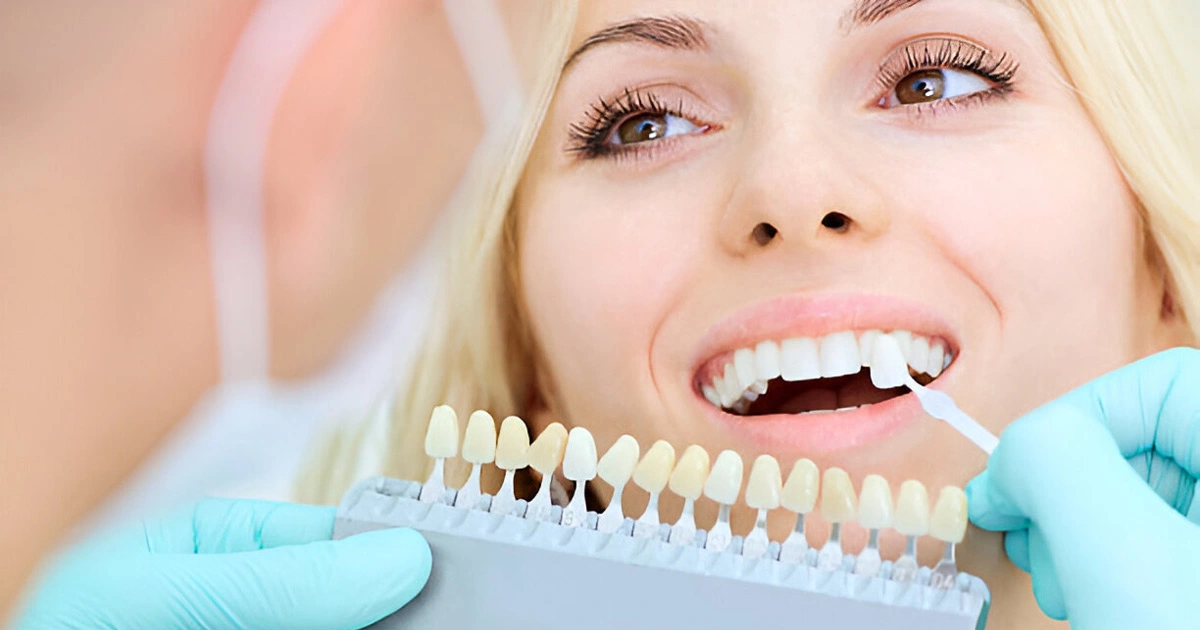
Medically reviewed by Dr. Eugene Bernstein, DDS, Practice Leader, General & Cosmetic Dentistry | 25+ Years Experience | Last Updated: May 2026
Direct answer: Dental crowns cannot be whitened with bleach, baking soda, hydrogen peroxide, or any over-the-counter whitening product. Crown materials (porcelain, ceramic, zirconia, PFM, composite resin) are non-porous and resist whitening agents, but their surfaces can be damaged by abrasive DIY methods. The three options if your crown looks dull or mismatched: have a dentist polish or re-glaze it, whiten your natural teeth to match the crown shade, or replace the crown.
- Whitening toothpaste, gels, strips: safe on natural teeth, no effect on the crown.
- Baking soda, charcoal, lemon, abrasive scrubs: dull the crown’s glaze and accelerate staining.
- Professional polishing: the only safe way to lift surface stain off a crown.
Need help with a dental crown in Newark?
If you are in Newark or nearby, call Gentle Dental of NJ to arrange a crown evaluation.
Can You Whiten Dental Crowns?
No. Dental crowns are made from porcelain, ceramic, zirconia, porcelain-fused-to-metal (PFM), or composite resin. None of these materials respond to whitening agents the way natural enamel does. Whitening gels and trays work because hydrogen peroxide or carbamide peroxide penetrates the porous structure of enamel and breaks down stain molecules inside the tooth. Crown materials are sealed and non-porous, so the active ingredient sits on the surface, evaporates, and changes nothing.
That is why crowns made today still look the same shade five, ten, or fifteen years later, while the natural teeth around them gradually yellow with age, coffee, tea, red wine, and tobacco. The crown holds its color. The neighbors do not. The result is the mismatch most patients notice: a crown that used to disappear into the smile now looks too white compared to the teeth next to it.
How Crown Materials Respond to Whitening
Different crown materials react differently to abrasion, stain, and polishing. The table below summarizes what each material can and cannot do.
| Crown material | Whitening agents (peroxide) | Vulnerable to abrasion? | Can be professionally polished? |
|---|---|---|---|
| Porcelain (all-ceramic) | No effect | Yes, glaze can be dulled | Yes |
| Ceramic / lithium disilicate (e.max) | No effect | Yes, glaze can be dulled | Yes |
| Zirconia (monolithic) | No effect | Most abrasion resistant | Yes, with diamond polish |
| Porcelain-fused-to-metal (PFM) | No effect on porcelain layer | Yes, plus metal margin can darken at the gum line | Yes (porcelain face only) |
| Composite resin (chairside) | No effect | Yes, picks up stain easily | Limited, usually re-polished or re-faced |
Zirconia is the most stain and abrasion resistant, which is why it is the standard for back-tooth crowns and for patients with grinding or clenching habits. Porcelain and lithium disilicate are popular for front teeth because they are the most lifelike, but their surface glaze is what gives the crown its shine, and that glaze can be dulled by abrasive home products. PFM crowns have a hidden vulnerability: the metal substructure can show as a dark gray line at the gum margin if the gum recedes, and that color cannot be lightened by any whitening agent.
Will Baking Soda, Hydrogen Peroxide, or DIY Whitening Damage Crowns?
The short answer: most DIY whitening agents will not lighten a crown, and several will damage it. Here is how each common at-home method affects crown materials.
| DIY method | Effect on crown color | Risk |
|---|---|---|
| Baking soda paste | None | High abrasion. Dulls porcelain and ceramic glaze. Composite resin wears fastest. |
| Hydrogen peroxide rinse | None | Low chemical risk to the crown itself, but can irritate gums and erode any natural enamel still under the crown margin if used long term. |
| Activated charcoal toothpaste | None | Highly abrasive, similar damage profile to baking soda. |
| Lemon juice / vinegar | None | Acidic, etches glaze on porcelain and ceramic crowns and damages natural enamel. |
| Standard whitening toothpaste | None on the crown | Generally safe in moderation. Look for an RDA (Relative Dentin Abrasivity) value under 100 to protect both crowns and enamel. |
Patients ask me about baking soda almost every week. The honest answer: it will not lighten the crown, but it will dull the glaze. After a year of daily baking soda paste, that “whiter look” people want actually shows up as a duller surface that picks up coffee and red wine stain faster than the original glaze did. We see this on porcelain crowns first, then zirconia. The fix is professional polishing, not more abrasion.
Dr. Eugene Bernstein, DDS, Practice Leader, Gentle Dental of NJ (NYU College of Dentistry, 25+ years)
Why Do Dental Crowns Stain or Lose Color?
The crown itself does not change color, but two things make it look like it has. First, surface stain accumulates on the glaze from the same things that stain natural teeth: coffee, tea, red wine, dark berries, soy sauce, curry, and tobacco. Smoking can stain both teeth and crown surfaces over time. This stain sits on top of the crown and can usually be polished off in the dental chair.
Second, the natural teeth around the crown keep aging. Enamel thins, dentin shows through more yellow, and contrast emerges. The crown is the same shade it was the day it was cemented. Your other teeth are not. That is the optical effect most patients describe as “my crown got darker.”
Older PFM crowns have a third issue. As gums recede with age, the metal collar at the gum margin becomes visible as a thin gray line. No amount of whitening will lighten metal. The fix is replacement with an all-ceramic or zirconia crown.
How to Match a Crown to Newly Whitened Teeth
This is the single most common reason a patient comes in saying “I want my crown whitened.” The crown is fine. The natural teeth changed. There are three options, ranked from least to most invasive.
- Whiten the natural teeth before the crown is made. The right time to whiten is at least two weeks before the crown is fabricated, so the dentist can match the crown to the brighter shade. If you are planning a crown and considering whitening treatments, do them in this order.
- Whiten the natural teeth after the crown. If the crown was made before whitening, professional in-office whitening or take-home trays can lighten the surrounding natural teeth. The crown will not change. If the natural teeth come up to match the crown shade, the mismatch resolves. This works only when the natural teeth are darker than the crown, not the reverse.
- Replace the crown. If the crown is darker than the natural teeth (or if the gum line is showing metal, or the porcelain has chipped or chronic stain), replacement is the only way to change the color. Dr. Bernstein matches the new crown to your current natural-tooth shade or to your post-whitening shade if you have completed whitening first.
Composite resin crowns and front-tooth bonding can sometimes be re-faced or re-veneered without full replacement, but porcelain, ceramic, and zirconia crowns cannot be re-colored once cemented. They come out, and a new one goes in.
Professional Alternatives to Whiten Crowns
When a patient asks our team to “whiten” a crown, what they usually need is one of these in-chair procedures.
- Professional cleaning and polishing. A hygienist’s polish, often with a fine prophy paste or a non-abrasive composite polish, lifts surface stain from the crown’s glaze without damaging it. This is the first step in almost every “my crown looks dull” visit.
- Air polishing. A controlled stream of fine glycine or erythritol powder removes biofilm and stain from porcelain and zirconia surfaces without abrasion. Safe on most crown types.
- Re-glazing or re-polishing porcelain. A dentist can re-polish a chipped or scratched porcelain glaze chairside with a graduated diamond-impregnated polishing system. This restores shine, not shade.
- Whitening the natural teeth. If the goal is matching, this is the right tool. Whitening treatments at our practice include in-office (single visit) and take-home trays. The crown stays the same; the rest of the smile catches up.
- Crown replacement. Discussed in the next section.
How to Preserve Crown Whiteness Long-Term
- Brush twice a day with a soft-bristle toothbrush and a low-RDA toothpaste (under 100 RDA is safest for both crowns and enamel).
- Floss daily, especially around the gum margin of the crown where biofilm collects.
- Skip baking-soda paste, charcoal toothpaste, lemon scrubs, and any “whitening hack” that involves an abrasive or an acid.
- Limit coffee, tea, red wine, soy sauce, curry, and tobacco. When you do consume them, rinse with water afterward.
- Schedule a professional cleaning every six months. Ask the hygienist to polish the crown surfaces specifically if you notice dulling.
- If the crown is on a front tooth and matters cosmetically, ask about a chairside re-polish before the cleaning ends.
When to Replace a Discolored Crown
Replacement is the right call when the discoloration is structural, not surface. Specific signs that a crown is at the end of its useful life:
- The crown looks darker than the natural teeth, and whitening the natural teeth still cannot bring them up to match.
- A thin gray line is visible at the gum margin (PFM with metal substructure showing through receded gum).
- The porcelain has chipped, cracked, or developed visible stain lines that polishing does not lift.
- The bite is uncomfortable, the crown is loose, or there is decay underneath, all of which require replacement regardless of color.
- The crown is more than 10 to 15 years old (the typical functional lifespan for porcelain and PFM; zirconia often lasts longer).
Replacement cost varies by material and by how much of the underlying tooth structure remains. Industry-standard ranges are $1,000 to $3,000 per crown depending on material (zirconia and lithium disilicate sit at the top of that range, PFM lower). At Gentle Dental of NJ we discuss exact fees, insurance coverage, and financing options at the consultation. When crowns need to be replaced covers the full decision framework. If your crown has come loose or fallen off, see what to do if your crown falls out for the immediate steps.
Frequently Asked Questions
Can you whiten dental crowns?
No. Crown materials (porcelain, ceramic, zirconia, PFM, composite resin) are non-porous and do not respond to peroxide-based whitening agents the way natural enamel does. The crown shade is locked in at fabrication and stays that color for the life of the crown.
Will baking soda whiten dental crowns?
No. Baking soda will not lighten the crown, and it will damage the surface glaze on porcelain, ceramic, and composite resin crowns. Long-term use of baking soda paste dulls the crown finish and makes it pick up coffee and red-wine stain faster than the original glaze.
Can you whiten porcelain crowns?
No. Porcelain is non-porous, so peroxide cannot penetrate it. The only way to change the color of a porcelain crown is to replace it with a new crown matched to your desired shade, or to re-face composite material if the crown is composite resin (not porcelain).
Can you whiten zirconia crowns?
No. Zirconia is the most stain-resistant and abrasion-resistant crown material, which means it holds its color longer than porcelain or PFM, but it also cannot be lightened by whitening agents. Surface stain on zirconia can be removed with professional polishing.
What are the alternatives if my crown does not match my whitened teeth?
Three options: whiten the natural teeth first and have the crown made to match, whiten the natural teeth after the crown to bring them up to the crown shade (only works when natural teeth are darker), or replace the crown with a new one matched to your current shade. A consultation determines which fits your case.
How much does it cost to replace a discolored crown?
Industry-standard ranges are $1,000 to $3,000 per crown depending on material, with zirconia and lithium disilicate at the top of the range and PFM lower. Final fees depend on the underlying tooth condition and your insurance coverage. Contact Gentle Dental of NJ at (973) 817-8888 for a personalized estimate.
How long do dental crowns stay white?
The crown itself stays the same shade for its functional lifetime, typically 10 to 15 years for porcelain and PFM, longer for zirconia. The look of “yellowing” usually comes from surface stain (removable by polishing) or from the natural teeth around the crown aging. See how long dental crowns last for the full lifespan breakdown by material.
Can a dentist polish or re-glaze a dull crown?
Yes. A professional polish removes surface stain from the glaze without damaging it. For porcelain crowns with chipped or scratched surfaces, a chairside re-polish or re-glaze with a diamond-impregnated polishing system can restore shine. This addresses dullness, not shade. How permanent are dental crowns covers what a properly maintained crown should look like over time.
If your crown is causing pain rather than just looking dull, see why does my crown hurt for the common causes and what to do.
Visit Gentle Dental of NJ in Newark, NJ
290 Ferry St B2, Newark, NJ 07105 (Ironbound)
(973) 817-8888 | Schedule a Consultation
Serving Newark, Ironbound, East Ferry, Belleville, Kearny, Harrison, North Ironbound, and Downtown Newark. Our team handles crown polishing, crown replacement, and professional whitening to match your existing restorations.
Disclaimer
This information is provided for educational purposes and is not a substitute for professional dental advice, diagnosis, or treatment. Please schedule a consultation with our team to discuss your individual needs.