
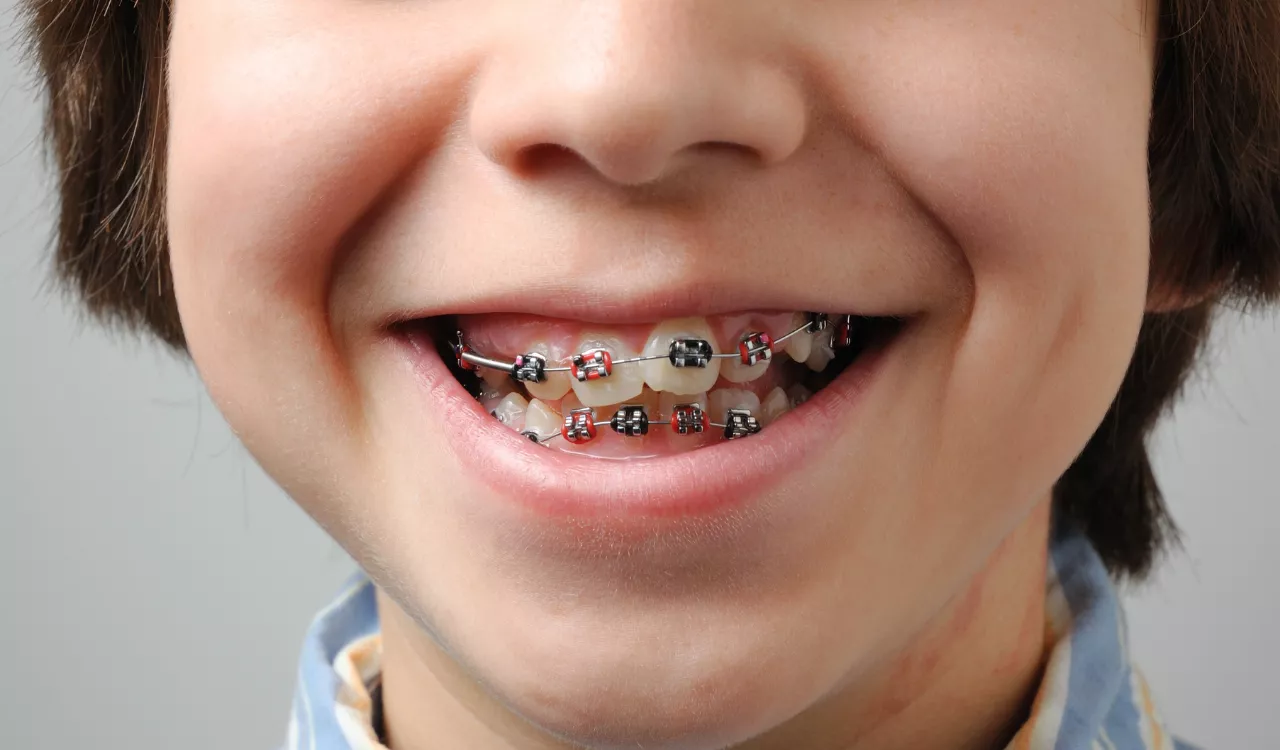
Most kids get braces between ages 9 and 14, but the American Association of Orthodontists recommends every child have an orthodontic evaluation by age 7. This early evaluation does not mean your child will get braces at age 7. It allows the orthodontist to identify potential problems while baby teeth are still present and determine the optimal timing for treatment.
Some children benefit from early intervention starting around ages 7 to 9. Most children begin comprehensive treatment between ages 11 and 14 when more permanent teeth have erupted. The right age depends on your child’s specific dental development, not a universal number.
Why Do Orthodontists Recommend an Evaluation at Age 7?
Many parents are surprised to hear that age 7 is the recommended time for a first orthodontic evaluation. It seems young. But there are important reasons for this recommendation.
Age 7 Is for Evaluation, Not Necessarily Treatment
Most 7-year-olds who visit the orthodontist do not leave with braces. They leave with a plan. The orthodontist assesses development, identifies any concerns, and creates a timeline for monitoring. Many children are told to return in 6 to 12 months for another check, with no treatment needed yet.
What the Orthodontist Looks For
At age 7, children typically have a mix of baby teeth and permanent teeth. The orthodontist can see how permanent teeth are erupting and predict potential problems. They look for early signs of crowding, where there may not be enough space for all permanent teeth. They check for bite issues like crossbite, overbite, underbite, or open bite. They assess jaw growth patterns that might need intervention. They also identify habits like thumb sucking or tongue thrust that can affect tooth position.
Some Problems Are Easier to Fix Early
Certain orthodontic issues respond better to treatment while a child is still growing. A narrow upper jaw, for example, is easier to expand when the palate has not yet fused, which typically happens in the early teen years. Crossbites can cause jaw asymmetry if left untreated during growth. Severe crowding may benefit from creating space before all permanent teeth erupt.
Early Detection Can Save Time and Money Later
Catching problems at age 7 may prevent more complex and expensive treatment at age 13. Some early interventions reduce or eliminate the need for braces later. Even when braces are still needed, early intervention can shorten treatment time or simplify the process.
What Is the Best Age to Get Braces?
While every child is different, there is an optimal window for most orthodontic treatment.
The Ideal Window Is Ages 9 to 14
For most children, the best time for comprehensive braces treatment is between the ages 9 and 14. During this window, most permanent teeth have erupted (except wisdom teeth), the jaw is still growing, children are mature enough to handle braces care, and treatment can be completed before high school.
Why This Age Range Works
Permanent teeth need to be in place for the orthodontist to align them properly. But some jaw growth remaining is helpful because the orthodontist can work with natural development. Children at this age can understand and follow instructions about brushing, food restrictions, and rubber bands.
Every Child Is Different
A child with severe crowding may start treatment at age 8 or 9. A child with mild issues may wait until age 12 or 13. The best age for your child is determined by their specific situation, not a general guideline. Trust your orthodontist’s recommendation based on their examination.
Can Kids Get Braces With Baby Teeth Still Present?
This is a common question from parents. The answer is yes, in certain situations.
Phase 1 Treatment (Early Intervention)
Some children receive braces or other orthodontic appliances while they still have baby teeth. This is called Phase 1 or early interceptive treatment. It typically occurs between ages 7 and 10 when children have a mix of baby and permanent teeth.
Phase 1 Is Not for Everyone
Most children do not need Phase 1 treatment. The orthodontist will only recommend it if there is a clear benefit. Conditions that may warrant early treatment include severe crowding that needs space created before permanent teeth erupt, crossbite causing jaw shift or asymmetric growth, protruding front teeth at risk of injury, underbite affecting jaw development, and harmful habits like thumb sucking causing bite problems.
What Phase 1 Looks Like
Early treatment may involve partial braces on just some teeth, a palatal expander to widen the upper jaw, space maintainers to hold room for permanent teeth, or other appliances designed for specific problems. Phase 1 typically lasts 6 to 18 months.
Phase 1 Is Often Followed by Phase 2
After early treatment, there is usually a resting period while the remaining permanent teeth erupt. Then, around ages 11 to 14, the child may need Phase 2 treatment with full braces to complete alignment. Two-phase treatment costs more overall, but for children who truly need early intervention, it prevents worse problems and may simplify the second phase.
What Happens If You Wait Too Long to Get Braces?
Parents sometimes wonder if they have missed the window for their child’s orthodontic treatment.
There Is No “Too Late”
Braces work at any age. Adults in their 30s, 40s, 50s, and beyond get braces successfully. If your child is 15 or 16 and has not had an orthodontic evaluation, it is not too late. Treatment can still achieve excellent results.
Advantages of Treating During Adolescence
There are benefits to treatment during the typical 9 to 14 age window. The jaw is still growing, which helps with certain corrections. Bone is less dense, so teeth may move slightly faster. Kids adapt quickly and often care less about appearance since many peers also have braces. Treatment can be completed before college or a career.
What Waiting Might Mean
If orthodontic problems are left untreated during childhood, crowding may get worse as more teeth erupt. The growth window for certain corrections, like jaw expansion, may close. Treatment as an adult may take slightly longer. However, the results are still excellent. Waiting does not mean your child cannot achieve a great smile.
Benefits of Waiting
In some cases, waiting is actually better. More permanent teeth are in place, giving the orthodontist a complete picture. The child may be more mature and cooperative. One phase of treatment may be sufficient instead of two.
Signs Your Child May Need Braces
How do you know if your child should see an orthodontist? Look for these common signs.
Visible Crowding
Teeth overlapping, crooked, or not fitting properly in the jaw. This becomes more obvious as permanent teeth come in.
Gaps Between Teeth
Noticeable spacing that persists after permanent teeth have erupted may indicate a jaw and tooth size discrepancy.
Bite Problems
Overbite, where the upper teeth significantly overlap the lower teeth. Underbite where lower teeth sit in front of the upper teeth. Crossbite where upper teeth sit inside the lower teeth on one or both sides. An open bite where the front teeth do not touch when the back teeth are closed.
Difficulty Chewing or Biting
If your child avoids certain foods, complains about chewing, or seems to chew awkwardly, bite alignment may be the cause.
Early or Late Loss of Baby Teeth
Losing baby teeth too early (before age 5 or 6) can cause spacing issues. Losing them late can delay permanent teeth and affect alignment.
Mouth Breathing
Chronic mouth breathing can indicate narrow palate or jaw development issues that may need orthodontic attention.
Speech Issues
Some speech problems relate to tooth or jaw position. An orthodontist can determine if alignment is contributing.
When in Doubt, Get an Evaluation
If you notice any of these signs, schedule an orthodontic consultation. It is better to check and find nothing than to miss a problem that could have been addressed earlier.
How to Prepare Your Child for Braces
Once you know your child needs braces, preparation helps the experience go smoothly.
Talk Positively About Braces
Do not express anxiety or negativity. Frame braces as something exciting that will give your child a great smile. Many kids are enthusiastic once they understand what to expect.
Let Them Choose Colors
If your child is getting metal braces with colored elastic bands, let them pick their colors. This gives them ownership and makes appointments fun. They can change colors at every adjustment to match seasons, holidays, or their mood.
Explain What to Expect
Tell your child that the appointment to get braces does not hurt. Explain that their teeth will be sore for a few days after. Prepare them for changes in eating habits.
Stock Up on Soft Foods
Before the braces appointment, buy yogurt, smoothie ingredients, soup, mashed potatoes, pasta, and ice cream. Have these ready for the first few days when chewing is uncomfortable.
Establish Good Oral Hygiene Now
Braces require excellent brushing and flossing. If your child does not brush thoroughly yet, work on building that habit before braces go on.
How Long Will My Child Wear Braces?
Parents want to understand the time commitment involved.
Average Treatment Time
Most children wear braces for 12 to 24 months, with 18 months being a common average. Treatment length depends on the severity of the problem, the type of braces, and how well the patient follows instructions.
Simpler Cases
Minor crowding or small gaps may take 12 to 18 months.
Complex Cases
Significant crowding, major bite correction, or cases requiring extractions may take 18 to 30 months.
After Braces Come Off
Your child will need to wear a retainer after the braces are removed. Initially, this means wearing the retainer most of the time. Eventually, it becomes nighttime wear only. Retainers maintain the results and prevent teeth from shifting back.
Your Orthodontist Will Provide a Timeline
At the consultation, the orthodontist will estimate treatment duration based on your child’s specific case. This estimate may adjust as treatment progresses.
How Much Do Braces Cost for Kids?
Cost is an important consideration for families.
Typical Cost Range
Braces for children typically cost $3,000 to $6,000, depending on case complexity, type of braces, and treatment length.
Insurance May Help
Many dental insurance plans include orthodontic coverage for children under 18. Coverage often ranges from $1,000 to $2,000 as a lifetime maximum. Check your plan for specific details.
Payment Plans Available
Most orthodontic practices offer monthly payment options to make treatment affordable. Ask about down payment requirements and monthly costs at your consultation.
Two-Phase Treatment Costs More
If your child needs Phase 1 and Phase 2 treatment, the total cost will be higher than single-phase treatment. However, early intervention may prevent more expensive problems later.
For a detailed breakdown of costs, payment options, and insurance information, see our complete guide: How Much Do Braces Cost?
Orthodontic Care for Kids at Gentle Dental of NJ
If you are looking for a trusted orthodontist for your child in the Newark area, Gentle Dental of NJ offers comprehensive care in a family-friendly environment.
Board-Certified Orthodontist
Dr. Ilya Lipkin, DDS, is a board-certified orthodontist and Clinical Professor at NYU College of Dentistry. Board certification means he has demonstrated expertise beyond minimum requirements. As a professor, he trains the next generation of orthodontists. Your child benefits from that teaching-level knowledge.
Experience With Children of All Ages
Gentle Dental of NJ has served families in Newark’s Ironbound community for years. The team has extensive experience treating children, from early evaluations at age 7 to comprehensive treatment for teens.
Gentle, Kid-Friendly Environment
The practice name reflects the approach. Children are treated with patience and kindness. The staff takes time to explain procedures, answer questions, and make young patients feel comfortable.
What Parents Say
Parents appreciate the caring environment. One Google reviewer noted: “My daughter loves the dentist after seeing the dentist at this place.” Another shared that the entire team makes patients feel at home.
With 137 Google reviews and a 4.5-star rating, Gentle Dental has earned the trust of local families.
Multi-Specialty Practice
If your child needs other dental work, such as a cleaning, filling, or extraction, before or during orthodontic treatment, it is handled in the same office. No referrals to other providers. Everything under one roof is convenient for busy families.
Multilingual Staff
The staff speaks English, Spanish, and Portuguese, reflecting the diversity of the Ironbound neighborhood. Every family can communicate comfortably.
Convenient Location and Hours
The office is located at 290 Ferry Street, Suite B2, Newark, NJ 07105. Extended evening and Saturday hours accommodate school and work schedules. The office is a 5-minute walk from Newark Penn Station with patient parking available.
Free Orthodontic Evaluation
The American Association of Orthodontists recommends that children have an orthodontic evaluation by age 7. At Gentle Dental of NJ, this initial consultation is free of charge. You will receive an honest assessment of your child’s orthodontic needs with no pressure and no obligation.
Disclaimer
Medically reviewed by Dr. Ilya Lipkin, DDS. This content is for educational purposes only and is not intended as medical advice, diagnosis, or treatment. Please consult a qualified healthcare provider for personalized recommendations.