
Medically reviewed by Dr. Eugene Bernstein, DDS, Founder of Gentle Dental of NJ, 24+ Years Experience | Last Updated: April 2026
Quick Answer
After dental implant surgery, eat soft, cool, and nutrient-dense foods for the first 24 to 48 hours, then transition to a moderate-soft diet for one to two weeks while the surgical site heals. Dairy is fine, but avoid alcohol entirely while on antibiotics, plus skip very hot foods, hard or crunchy items, and using a straw for the first week.
If your dentist has scheduled dental implant surgery and you are wondering what you can actually eat afterward, the practical answer is: more than you might expect. Dental implant placement is less invasive than a standard tooth extraction, and the food restrictions are shorter than most patients assume. This guide covers what to eat day by day for the first two weeks, what to avoid and why, and the few real food-related complications to watch for.
Answers throughout are anchored in clinical guidance from Dr. Eugene Bernstein, DDS, founder of Gentle Dental of NJ in Newark, who has placed dental implants for over 24 years.
The Day-by-Day Recovery Diet
| Time After Surgery | Recommended Foods | What to Avoid |
|---|---|---|
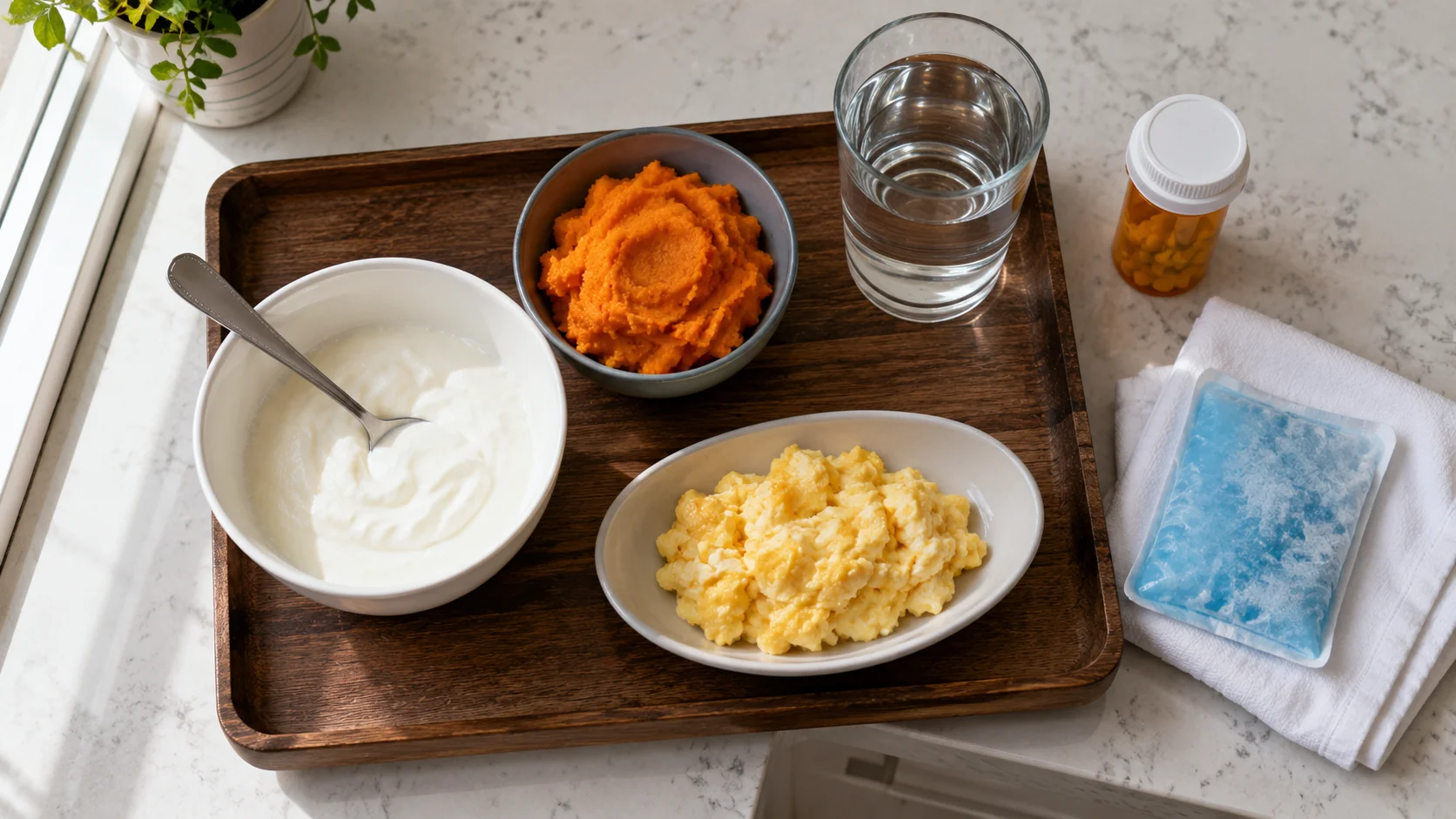
| First 24 hours | Cool yogurt, smoothies (spoon only, no straw), cold soup, ice cream, applesauce, Jell-O, lukewarm broth | Hot food and drinks, alcohol, straws, anything that requires chewing on the surgical side |
| Days 2-4 | Scrambled eggs, mashed potatoes, oatmeal, refried beans, well-cooked pasta with smooth sauce, soft fish, cottage cheese, banana | Hot/spicy foods, anything with seeds (raspberries, sesame), crunchy items, alcohol |
| Days 5-7 | Tender chicken (cut small), well-cooked vegetables, soft bread, ripe melons, tofu, ground meat, soft cheese | Steak, raw vegetables, popcorn, nuts, hard bread crusts, sticky candy, alcohol while on antibiotics |
| Week 2 | Most normal foods, chewing on opposite side from surgical site | Crunchy nuts, hard candy, popcorn kernels, ice chewing |
| Week 3+ (until crown) | Common-sense diet, regular foods | Direct chewing pressure on the implant healing cap |
The pattern: cool and liquid the first day, soft and warm by midweek, gradually moving to firmer textures over the second week, and largely back to normal at three weeks while still being mindful that the implant is integrating into the bone underneath.
Why the Diet Restrictions Matter
Three things are happening at the surgical site that the diet supports:
- Initial blood clot stabilization (first 24 hours). The implant socket needs an undisturbed clot to start healing. Hot liquids, alcohol, and straws all create suction or vasodilation that can dislodge the clot.
- Soft tissue healing (days 2 to 14). The gum needs to seal around the implant healing cap. Sharp food edges, seeds, and hard chewing all delay this.
- Osseointegration, the bone bonding to the implant (3 weeks to 6 months). Heavy chewing pressure on the implant during this window can disturb the integration. The healing cap is meant to keep food off the implant during this whole phase.
This is why “what to eat” rules tighten and loosen at clear thresholds rather than running on a single recovery clock.
Dairy Is Allowed (and Common Misconception)
Many patients hear that dairy must be avoided after implant surgery. That is not correct.
Dr. Bernstein on dietary restrictions after implants: “You can consume dairy products. There is no contraindication for any kind of food, except for alcohol because patients are on antibiotics.”
Cool yogurt and ice cream are actually among the best first-day foods because they are soft, soothing to the surgical area, and high in protein and calcium that support healing. The only real food-related restriction during the recovery is alcohol, which interacts with the prescribed antibiotic regimen and slows soft-tissue healing.
For the broader picture of the post-implant healing window, see our companion guide on why no dairy after dental implants (the answer: dairy is fine).
What About Pain, Swelling, and Painkillers
Most patients are surprised at how little pain dental implant placement causes. The procedure is less invasive than a tooth extraction. Swelling peaks at day 2 to 3, then subsides over the rest of the first week.
The standard medication regimen is a 5 to 7 day course of antibiotics plus painkillers as needed. Most patients stop the painkillers within 48 to 72 hours.
Dr. Bernstein on post-implant pain: “There isn’t usually significant pain. We prescribe antibiotics and painkillers, but most people don’t need painkillers after the second or third day.”
Ice packs on the cheek for 15 minutes on, 15 off, during the first 24 to 48 hours help control swelling. Sleep with your head elevated on an extra pillow for the first night or two.
For more on managing the full pain timeline, see dental implant recovery and pain relief.
Foods That Help Healing
Beyond just “what is safe to chew,” some foods actively support implant healing:
- High-protein soft foods: Greek yogurt, cottage cheese, scrambled eggs, soft fish (salmon, tilapia), tofu, smoothies with protein powder. Protein supports tissue repair.
- Vitamin C sources: Mashed sweet potato, ripe banana, watermelon, smoothies with strawberry or mango. Vitamin C supports collagen and gum tissue formation.
- Calcium and vitamin D: Yogurt, milk, fortified plant milks, cheese. Supports bone integration around the implant.
- Anti-inflammatory choices: Cooked leafy greens (well-cooked, no raw spinach), turmeric in soups, oatmeal. Reduces post-surgical inflammation.
- Hydration: Water, herbal tea (lukewarm), coconut water. Avoid sugary sports drinks and skip carbonated drinks for the first week.
What to Strictly Avoid
Alcohol is the one absolute. It blocks the antibiotic effect, dilates blood vessels (worsening swelling), and slows tissue healing. Skip it for the duration of the antibiotic course (typically 5 to 7 days) and ideally for two weeks.
Smoking is the other major factor. Nicotine constricts blood vessels at the surgical site and dramatically increases the risk of implant failure. Quitting (even temporarily for the first week) substantially improves implant survival rates.
Straws for the first 7 to 10 days. The suction can dislodge the protective blood clot and cause a painful dry-socket-like complication.
Crunchy and hard foods in the first week: chips, nuts, popcorn, hard candy, hard pretzels, raw carrots, ice. They can press into the surgical site or get lodged in the gum opening.
Foods with seeds (sesame, raspberry, kiwi) for the first 10 days. Tiny seeds can lodge in the gum line around the implant.
Very hot foods and drinks the first 24 to 48 hours. Heat increases bleeding and dislodges the early blood clot.
Spicy foods for the first week. They irritate the healing tissue and can cause discomfort even at the implant site.
Eating on the Surgical Side
Chew on the opposite side from the implant for the first one to two weeks. After the soft tissue has fully sealed (typically two weeks), gentle chewing on the implant side is fine for soft foods, but the protective healing cap prevents you from putting heavy chewing pressure directly on the implant itself.
Full-pressure chewing returns when the permanent crown is placed, which Dr. Bernstein notes happens at three months for the lower jaw or four to five months for the upper jaw, after the implant has integrated with the bone.
When Normal Eating Resumes
Dr. Bernstein on resuming normal eating: “You can eat normally once the implant is restored with a crown. After placing the implant, we usually wait three months for the lower jaw and four to five months for the upper jaw before placing the crown.”
The healing cap during the integration period protects the implant from direct chewing forces, so soft food on the implant side is acceptable from week 2 onward. The full-bite-force return happens once the crown is placed, which is also when the implant becomes indistinguishable from a natural tooth in function.
For the precise integration timeline, see how long after dental implants can I eat normally.
Warning Signs During Recovery
Most patients have an uneventful recovery. Call the dentist same-day for any of the following:
- Bleeding that does not stop after 30 minutes of firm gauze pressure (a small amount of oozing for the first 24 hours is normal)
- Severe pain that gets worse after day 3 rather than improving
- Fever above 101F at any point in the first week
- Pus, foul taste, or yellow discharge from the surgical site
- Swelling that worsens after day 4
- Numbness in the lip or tongue that is not fading after 24 hours
- The healing cap loosens or falls off
Working with Gentle Dental of NJ in Newark
Dr. Bernstein has been placing implants at the practice for over 24 years, with a 98% success rate and patients who have had implants in service for over 25 years. The team serves Newark including Ironbound, Forest Hill, Vailsburg, Weequahic, and surrounding Essex County. After-hours questions about post-implant recovery can be left at the office number.
Considering a dental implant or have a recovery question? Call Gentle Dental of NJ at (973) 817-8888 or visit our office at 290 Ferry Street, Newark, NJ. Schedule a consultation.
Frequently Asked Questions
What can I eat the first day after dental implant surgery?
Cool, soft foods that require no chewing: yogurt, smoothies (spoon only, no straw), cold soup, ice cream, applesauce, Jell-O, and lukewarm broth. Avoid hot food and drinks, alcohol, and straws for at least the first 24 hours.
Can I eat dairy after a dental implant?
Yes. Dr. Bernstein confirms there is no contraindication for dairy. Yogurt and ice cream are actually among the best first-day foods because they are soft, soothing, and protein-rich. The only real diet restriction is alcohol, which interacts with the prescribed antibiotics.
How long do I have to eat soft foods after dental implant surgery?
Soft and cool for the first 24 to 48 hours, soft and warm through day 7, transitioning to firmer textures during week 2. Most patients return to a normal common-sense diet by 2 to 3 weeks, while avoiding heavy direct chewing on the implant healing cap until the crown is placed.
Can I drink coffee after dental implant surgery?
Wait until day 2 or 3 and let the coffee cool to lukewarm. Hot coffee on day 1 can dislodge the early blood clot and worsen bleeding. Skip the straw and avoid sugary creamers that can sit in the surgical site.
When can I eat steak again after a dental implant?
Tender, well-cut meat is fine by week 2 if chewed on the opposite side from the implant. Tougher cuts of steak are best deferred to week 3 or later. Once the permanent crown is placed at 3 to 5 months, you can chew anything with the implant side.
Why no straws after dental implant surgery?
The suction created by drinking through a straw can pull the protective blood clot out of the surgical site, slowing healing and causing pain similar to a dry socket. Skip straws for the first 7 to 10 days; spoon or sip from a cup instead.
This article is for informational purposes only and is not a substitute for professional dental advice, diagnosis, or treatment. Always consult with a qualified dental provider regarding any oral health concerns.