
Medically reviewed by Dr. Eugene Bernstein, DDS, Founder of Gentle Dental of NJ, 24+ Years Experience | Last Updated: April 2026
Quick Answer
Temporary dental crowns are designed to last two to three weeks while a dental lab fabricates the permanent crown, and they should not be kept longer than two to three months even if delays happen. Mild sensitivity for a few hours after placement is normal; sharp pain after the first week, looseness, or a temp crown that pops off needs a same-day call to your dentist.
Need help with a dental crown in Newark?
If you are in Newark or nearby, call Gentle Dental of NJ to arrange a crown evaluation.
If your dentist just placed a temporary dental crown and you are wondering how long it lasts, what level of pain or sensitivity is normal, and whether you can whiten or eat normally with it, this guide covers each of those questions with answers from Dr. Eugene Bernstein, DDS, founder of Gentle Dental of NJ in Newark.
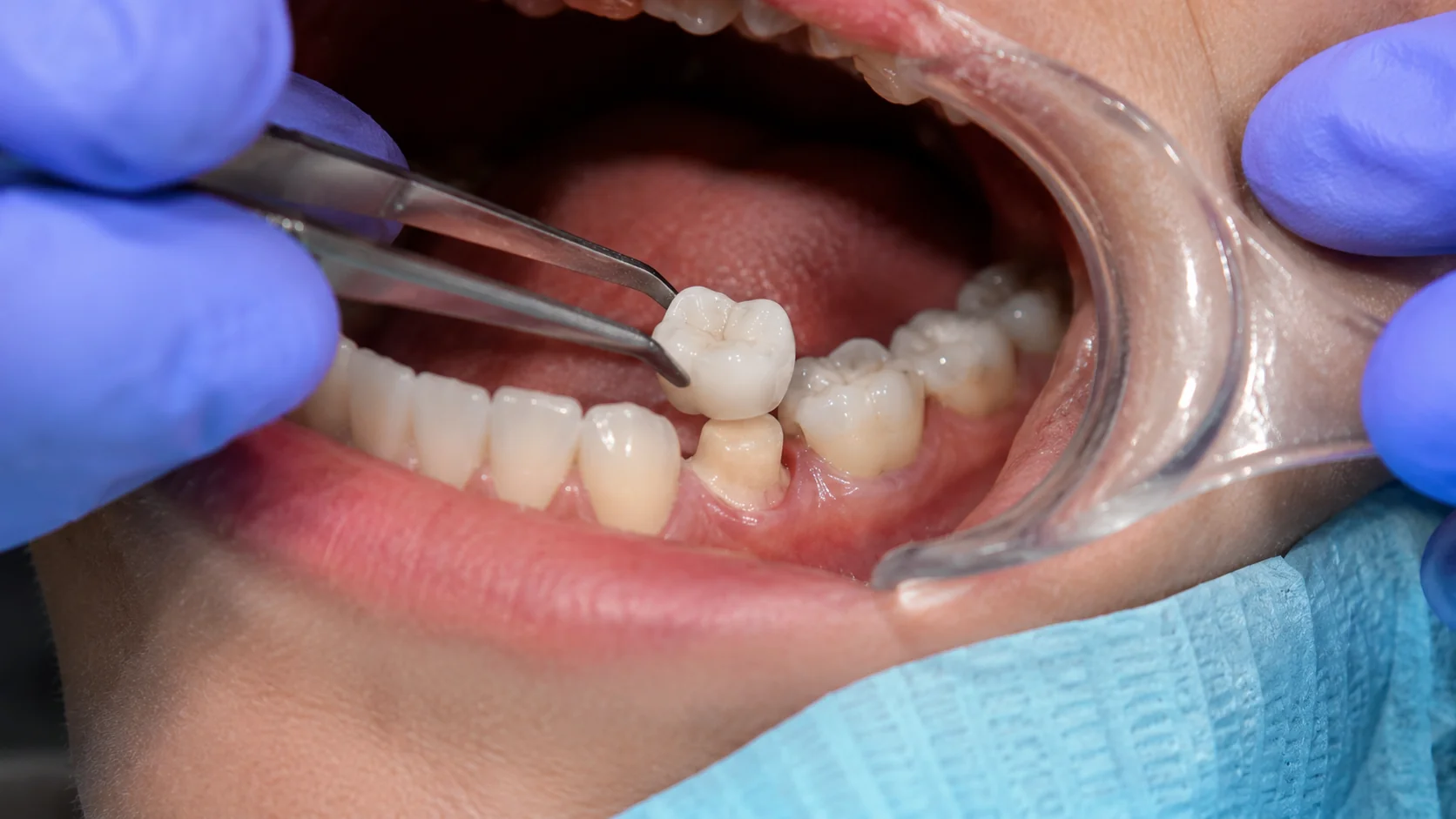
Temporary crowns are a real procedure step, not a placeholder you can ignore. They protect the prepared tooth, preserve your bite, and give the dental lab the working time it needs to fabricate a permanent crown that fits exactly. Below is what to expect over the two to three week typical wait, when sensitivity counts as normal versus a problem, and what to do if the temp comes loose.
How Long Do Temporary Dental Crowns Actually Last
The standard wait between a temporary crown and the permanent one is two to three weeks, which is how long the dental lab needs to fabricate, glaze, and ship a custom porcelain crown back to the dentist’s office. Some practices with in-house CEREC mills can deliver a permanent same-day, in which case there is no temporary at all.
If the lab schedule, an unexpected appointment delay, or a needed root canal pushes the timeline, a well-cemented temporary crown can hold up for two to three months. That is the upper bound. Beyond three months, the temporary cement weakens, the acrylic material wears at the bite contact, and the underlying tooth is at higher risk for sensitivity or new decay.
Dr. Bernstein on temporary crown lifespan: “Temporary crowns are designed to be a temporary solution, ideally kept for two to three months if necessary. Most of the time, we place the permanent restoration soon after.”
Is It Normal for a Temporary Crown to Hurt
Mild sensitivity for a few hours to a few days after the temp goes on is expected. The tooth has been reduced in size to make room for the crown, and the prepared dentin can register cold, hot, and sweet stimuli more easily until the permanent crown is cemented. Most patients find that sensitivity fades within the first week.
What is NOT normal:
- Sharp pain when you bite down after the first 48 hours, usually means the temporary crown is sitting too high and needs a quick adjustment
- Throbbing pain that wakes you at night after week one, can indicate the underlying tooth needs a root canal
- Pain that gets worse over time rather than easing, flag for a same-day check
- Persistent cold sensitivity past two weeks with no sign of fading
Dr. Bernstein on crown sensitivity timing: “There might be very mild sensitivity for a few hours after the procedure.” On underlying tooth pain: “If you feel pain, it might be because the tooth needs additional treatment like a root canal. This can happen after crown preparation if the tooth becomes sensitive.”
Eating With a Temporary Crown
Temporary crowns are made of acrylic or composite resin, much softer than the porcelain or zirconia of the permanent. They will hold up to most everyday eating but a few habits will pop the temp off or break it:
| Food / Habit | OK With Temp Crown? |
|---|---|
| Soft pasta, eggs, rice, fish | Yes |
| Bread, well-cooked vegetables | Yes (chew on the opposite side if comfortable) |
| Steak, chicken (cut small) | Yes, opposite side preferred |
| Sticky candy, caramel, taffy, gum | No, will pull the temp off |
| Hard candy, ice, popcorn kernels | No, can crack the temp |
| Apples, raw carrots (whole bites) | No, slice or grate first |
| Crusty bread, bagels, hard pretzels | Use caution, opposite side only |
For flossing, slide the floss in and pull it OUT to the side rather than snapping it up, pulling up can lift the temp.
Can You Whiten a Temporary Crown
No. Temporary crowns are made from acrylic or composite, neither of which responds to peroxide-based whitening agents. The dye in tea, coffee, red wine, and tobacco can stain the temp surface, but you cannot bleach those stains out the same way you can with natural enamel.
The good news: the permanent crown is selected to match the shade of your surrounding teeth, so any temporary discoloration is irrelevant within two to three weeks. If you are planning a whitening treatment for the rest of your teeth, do that BEFORE the permanent crown is fabricated so the lab can match the brighter shade.
For more on whitening considerations with permanent crowns, see our guide on how to whiten dental crowns.
What to Do If Your Temporary Crown Comes Off
This happens to roughly one in twenty patients during the temp-to-permanent wait, often from sticky food or aggressive flossing. The fix is straightforward as long as you follow the right steps:
- Save the temporary crown. Do not throw it away. Rinse it with water and place it in a small container.
- Call your dentist the same day. Most offices reserve same-day slots for situations like this. Tell the front desk the temp came off so they triage it as urgent.
- Do NOT try to glue it back with super glue or household cement. Those products are toxic to oral tissue and will trap food debris.
- If you cannot reach the office same-day, a temporary fix using over-the-counter dental cement (Dentemp, Recapit) from any pharmacy can hold the crown in place for 24-48 hours.
- Avoid chewing on the side of the missing temp until it is reseated, the prepared tooth is exposed and vulnerable to damage and sensitivity.
For the parallel scenario with a permanent crown, our guide on what to do if your dental crown falls out walks through the differences.
Caring for Your Temporary Crown
The whole goal during the two to three week wait is keeping the temp seated, the underlying tooth comfortable, and the gum tissue healthy enough for permanent cementation. A short list of habits to keep:
- Brush gently around the temp, twice daily. Use a soft-bristle brush.
- Slide floss out to the side, never snap or lift through the contact point.
- Use lukewarm water, not very hot or very cold, for the first few days to limit sensitivity.
- Avoid the foods in the table above for the full duration.
- Rinse with warm salt water two to three times a day if the gum around the temp feels irritated. Mix one teaspoon salt in a cup of warm water.
- Use a desensitizing toothpaste (Sensodyne, Colgate Sensitive Pro-Relief) if cold or sweet sensitivity persists past day three.
- Keep the next-appointment date on your calendar, the longer the temp stays in beyond three weeks, the more risk of cement breakdown.
When the Permanent Crown Goes On
The permanent crown appointment is short, often 45 minutes for a single tooth. The dentist removes the temporary, cleans the prepared tooth, tries the permanent for fit and bite, and cements it in place. Brief sensitivity for a few hours after permanent cementation is normal as the tooth adjusts. After that, the permanent crown should feel completely natural.
For the broader picture of how dental crowns work and the lab process, see our piece on how dental crowns work.
Working with Gentle Dental of NJ in Newark
Dr. Bernstein has been placing crowns at the practice for over 24 years. The team serves patients across Newark, including Ironbound, the Forest Hill area, Vailsburg, and Weequahic, plus surrounding Essex County communities. If a temporary crown is causing discomfort, has come off, or has been in place for longer than three weeks because of a delay, do not wait, a quick adjustment or recement is straightforward and prevents the prepared tooth from becoming sensitized or damaged.
Have a temporary crown question or concern? Call Gentle Dental of NJ at (973) 817-8888 or visit our office at 290 Ferry Street, Newark, NJ. Same-day evaluations available for crown discomfort or temp loss. Schedule a consultation.
Frequently Asked Questions
How long can a temporary crown last if I cannot get the permanent one placed right away?
A well-cemented temporary crown can hold up for two to three months as an upper bound. Beyond that, the cement weakens, the acrylic wears at the bite, and the prepared tooth underneath is at higher risk for sensitivity or decay. Schedule the permanent crown placement as soon as the lab delivers it.
Why does my temporary crown hurt when I bite down?
Sharp pain when biting down usually means the temporary crown is sitting slightly too high. A two-minute adjustment by your dentist with a polishing bur will fix it. If pain throbs at rest or wakes you at night, the underlying tooth may need a root canal.
Can I whiten my teeth while I have a temporary crown?
You can whiten the surrounding natural teeth, but the temporary crown itself will not whiten. If you plan to whiten, do it BEFORE the permanent crown is fabricated so the lab can match the brighter shade. Whitening after permanent placement creates a shade mismatch.
What can I eat with a temporary crown?
Soft foods are safest. Avoid sticky candy, hard candy, ice, popcorn kernels, and whole bites of apples or raw carrots. Cut tougher foods small and chew on the opposite side from the temp. Flossing should slide out to the side, not snap up through the contact.
What should I do if my temporary crown falls off?
Save the crown, call your dentist the same day, and do not glue it back with household products. Most offices reserve same-day slots for crown losses. Dr. Bernstein recommends contacting the dentist right away and keeping the temp.
How long after the permanent crown is placed will sensitivity go away?
Mild sensitivity for a few hours after permanent cementation is normal as the tooth adjusts. Persistent sensitivity beyond a week, especially to cold or biting pressure, should be evaluated. Sometimes a bite adjustment is needed; rarely the underlying tooth requires a root canal.
This article is for informational purposes only and is not a substitute for professional dental advice, diagnosis, or treatment. Always consult with a qualified dental provider regarding any oral health concerns.