
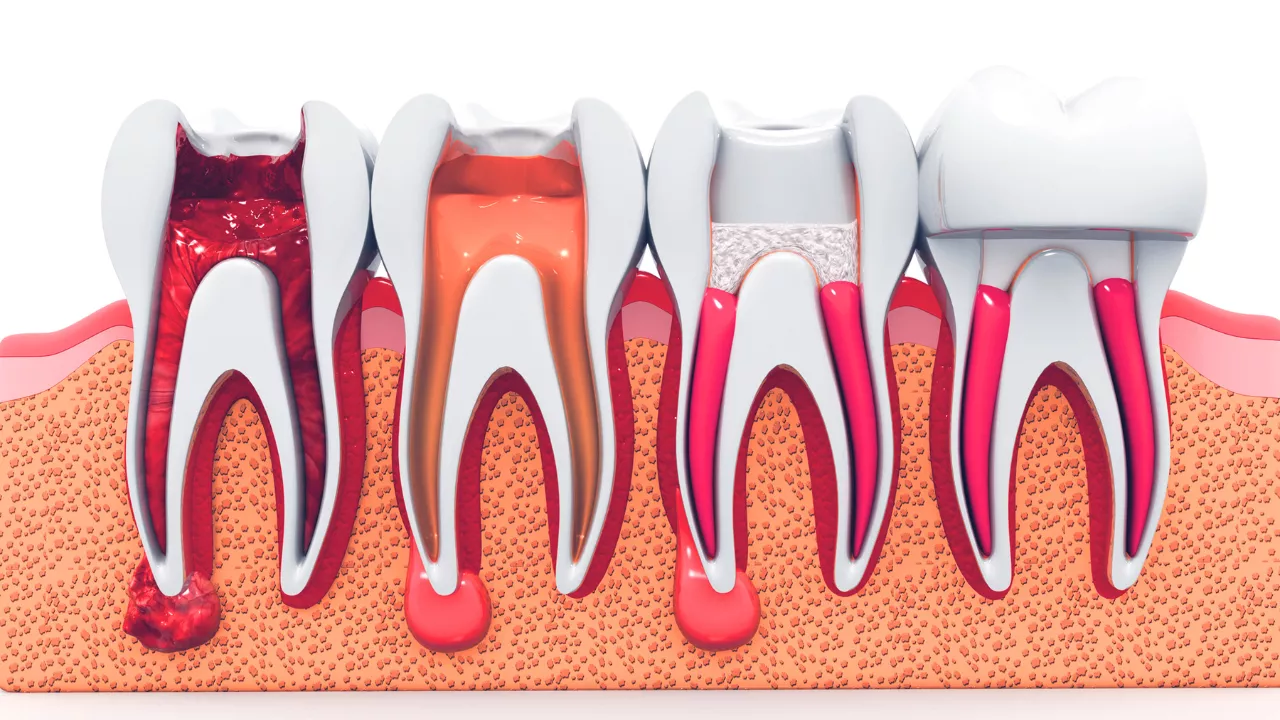
A root canal typically costs between $700 and $1,500 per tooth without insurance. The price depends primarily on which tooth needs treatment. Front teeth cost less, at $700 to $900, because they have a single root, while molars cost $1,000 to $1,500 because they have multiple roots that require more time and expertise. With dental insurance, most patients pay 50% to 80% less out of pocket.
If you are experiencing tooth pain and worried about the cost of treatment, understanding your options can help you make an informed decision. A root canal is often more affordable than the alternative of extracting the tooth and replacing it with an implant.
What Affects the Cost of a Root Canal?
Several factors determine how much you will pay for a root canal. The most significant factor is which tooth needs treatment. Front teeth (incisors and canines) have one root canal and are the least expensive to treat. Bicuspids (premolars) have one or two canals and fall in the middle price range. Molars have three or four canals and require the most time and skill, making them the most expensive.
Your geographic location also affects pricing. Dental costs in urban areas like Newark tend to reflect the local cost of living. Who performs your root canal matters as well. A general dentist may charge less than an endodontist, though endodontists specialize exclusively in root canal treatment and handle more complex cases.
The complexity of your specific case plays a role, too. A straightforward infection is less expensive to treat than a tooth with curved canals, previous failed treatment, or complications requiring additional appointments.
Root Canal Cost by Tooth Type
Understanding costs by tooth type helps you estimate what you might pay. These ranges reflect typical prices in the Newark, New Jersey area.
Front teeth, including incisors and canines, typically cost $700 to $900 for the root canal procedure. These teeth have a single, straight canal that is relatively quick to treat.
Bicuspids or premolars usually cost $800 to $1,100. These teeth have one or two canals and require moderate treatment time.
Molars are the most expensive at $1,000 to $1,500. Back teeth have three or four canals, some of which may be curved or difficult to access. Treatment takes longer and requires more expertise.
Keep in mind, these prices are for the root canal procedure only. The dental crown placed afterward is a separate cost.
Root Canal Cost With Insurance
If you have dental insurance, your out-of-pocket cost for a root canal will be significantly lower. Most dental insurance plans cover root canals as a major procedure, typically paying 50% to 80% of the cost after you meet your deductible.
For example, if your root canal costs $1,000 and your insurance covers 50%, you would pay $500 plus any remaining deductible. Some plans have higher coverage percentages for in-network providers, so checking whether your dentist participates in your insurance network can save you money.
Be aware that most dental insurance plans have an annual maximum benefit, often $1,000 to $2,000 per year. If you have already used a portion of your benefits for other dental work, you may have less coverage available for your root canal.
Before your procedure, ask your dental office to submit a pre-treatment estimate to your insurance company. This gives you a clear picture of your expected costs before treatment begins.
Root Canal Cost Without Insurance
Without dental insurance, you will pay the full fee for your root canal, typically $700 to $1,500, depending on the tooth. While this may seem expensive, many dental offices offer options to make treatment more affordable.
Ask about cash pay discounts. Some practices offer a percentage off for patients who pay in full at the time of service. Payment plans allow you to spread the cost over several months, often with little or no interest. Third-party financing through companies like CareCredit can break your total cost into manageable monthly payments.
Dental discount plans are another option for uninsured patients. For an annual membership fee, you receive reduced rates on dental procedures, sometimes 20% to 40% off standard fees.
At Gentle Dental of NJ, we work with patients to find payment solutions that fit their budget. We believe cost should not prevent anyone from saving their natural tooth.
Does Root Canal Cost Include the Crown?
No, the cost of a root canal does not include the dental crown. This is an important distinction that surprises many patients.
After a root canal, most teeth need a crown to protect and strengthen them. A tooth that has had root canal treatment becomes more brittle over time because the living tissue inside has been removed. A crown covers the tooth and prevents it from cracking or breaking.
Dental crowns typically cost $800 to $1,500 per tooth, depending on the material used. This means your total investment for saving a tooth with a root canal and crown may range from $1,500 to $3,000.
While this sounds like a significant expense, it is still typically less expensive than extracting the tooth and replacing it with a dental implant. Crowns placed after root canals can last 15 to 20 years or longer with proper care, making them a worthwhile long-term investment.
Is a Root Canal Worth the Cost?
Yes, a root canal is almost always worth the cost when you compare it to the alternatives. The purpose of a root canal is to save your natural tooth, and keeping your natural teeth is better for your oral health and more affordable in the long run.
Consider the alternative. If you skip the root canal and have the tooth extracted instead, you will need to replace the missing tooth. A dental implant, which is the best replacement option, costs $3,000 to $5,000 or more for the implant, abutment, and crown. A dental bridge costs $2,000 to $5,000 and requires altering the healthy teeth on either side.
Beyond cost, your natural tooth functions better than any replacement. Natural teeth have a ligament that provides sensation and cushioning when you bite. Implants and bridges, while excellent options when needed, cannot replicate this natural feel.
Root canals have a success rate of approximately 95% and can last a lifetime with proper care. When you factor in longevity and function, a root canal is one of the best investments you can make in your dental health.
Signs You May Need a Root Canal
Understanding the signs that indicate you may need a root canal helps you seek treatment before the problem worsens. Common symptoms include severe toothache pain, especially when chewing or applying pressure to the tooth. Prolonged sensitivity to hot or cold temperatures that lingers after the source is removed is another warning sign.
You may notice darkening or discoloration of the tooth, which indicates the nerve inside may be dying. Swelling and tenderness in the nearby gums, a persistent pimple on the gums near the affected tooth, or a bad taste in your mouth can all signal infection.
If you experience any of these symptoms, do not wait. An infected tooth will not heal on its own, and the infection can spread. Early treatment is typically less complex and less expensive than waiting until the infection becomes severe.
What to Expect During a Root Canal
Many patients worry that root canals are painful, but modern techniques make the procedure comfortable. Your dentist or endodontist will numb the area with local anesthesia before beginning. Most patients report feeling pressure but no pain during treatment.
The procedure typically takes 60 to 90 minutes for a single tooth. Your dentist will create a small opening in the tooth, remove the infected pulp tissue, clean and shape the canals, then fill and seal them. In some cases, treatment may require two visits.
After the procedure, you may experience mild soreness for a few days, which over-the-counter pain medication can manage. Most patients return to normal activities the same day. You will need a follow-up appointment to have your permanent crown placed once the tooth has healed.
Affordable Root Canal Treatment in Newark, NJ
At Gentle Dental of NJ, our endodontic care is provided by Dr. Mariya Rozenblum, DDS, an experienced endodontist who specializes in saving teeth through root canal therapy. Having an in-house endodontist means you receive specialized care without needing a referral to an outside office.
Our multi-specialty practice handles your entire treatment under one roof, from the initial evaluation and root canal procedure to the final crown placement. This convenience saves you time and ensures continuity of care throughout your treatment.
We use modern techniques and technology to make root canals as comfortable as possible. Many patients are surprised at how quick and painless the procedure is with our gentle approach.
Our office accepts most major dental insurance plans and offers flexible payment options for patients without insurance. We believe everyone deserves access to quality dental care, and we work with you to find a payment solution that fits your budget.
Gentle Dental of NJ is located at 290 Ferry Street in Newark’s Ironbound neighborhood, just five minutes from Newark Penn Station. We offer extended evening hours and Saturday appointments to accommodate your schedule. Our team speaks English, Spanish, and Portuguese.
If you are experiencing tooth pain or have been told you need a root canal, do not let cost concerns delay your treatment. Call us at 973-817-8888 to schedule a consultation and learn about your options.
Frequently Asked Questions
How long does a root canal take?
A root canal typically takes 60 to 90 minutes for one tooth. Front teeth with a single canal may be completed in 45 minutes, while molars with multiple canals may take up to two hours. Some complex cases require two appointments.
Is a root canal painful?
Modern root canals are not painful. Your dentist will numb the area completely before beginning, so you should feel pressure but not pain during the procedure. Most patients compare it to getting a filling. Any soreness afterward is mild and manageable with over-the-counter pain medication.
Can I go to work after a root canal?
Yes, most patients return to work or normal activities the same day. Your mouth may be numb for a few hours after the procedure, so you may want to wait before eating. Avoid chewing on the treated tooth until your permanent crown is placed.
How long does a root canal last?
A root canal can last a lifetime with proper care. Success rates are approximately 95%. The key to longevity is protecting the tooth with a crown and maintaining good oral hygiene with regular brushing, flossing, and dental checkups.
Disclaimer
Medically reviewed by Dr. Eugene Bernstein, DDS. This content is for educational purposes only and is not intended as medical advice, diagnosis, or treatment. Please consult a qualified healthcare provider for personalized recommendations.